
How to fix car engine misfire under load usually comes down to finding what fails only when the engine is working hard: ignition spark, fuel delivery, air metering, or a mechanical issue that shows up under pressure. If your car feels fine at idle but stumbles on hills, during passing, or while towing, that “only under load” clue matters because it narrows the suspects.
Misfires under load are worth taking seriously, not because every case is catastrophic, but because repeated misfire can overheat the catalytic converter and leave you stranded at the worst time. A lot of people keep driving since the car “still runs,” then end up with a bigger bill that started as a small miss.
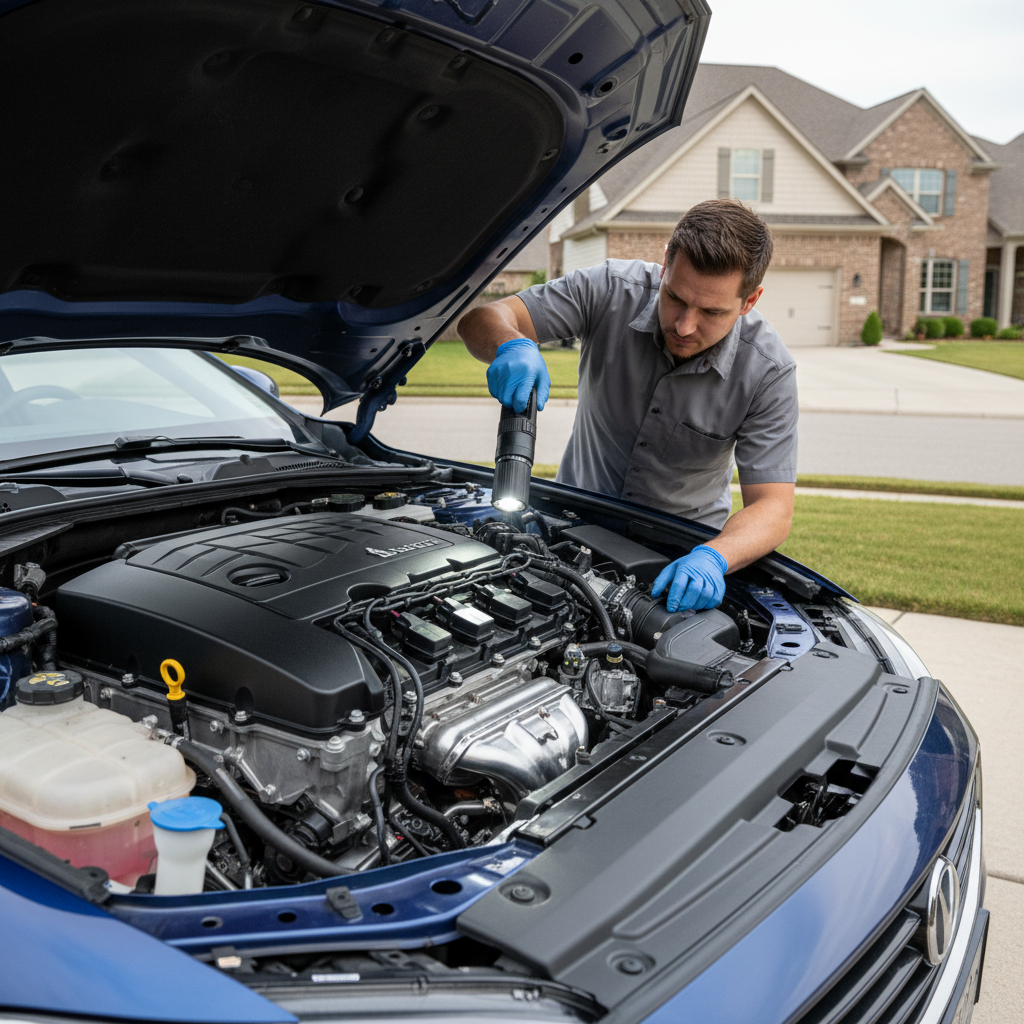
This guide focuses on practical diagnosis you can do without guessing. You’ll get a quick checklist, a cause-and-fix table, and a safe workflow to decide whether this is a DIY spark plug job or a “book a shop” situation.
What “misfire under load” feels like, and why it happens
A misfire means one or more cylinders don’t burn the air-fuel mix correctly. Under load, cylinder pressure rises, and that makes weak spark, marginal fuel pressure, or small air leaks show their hand. That’s why the same engine can idle smoothly yet shake when you ask for torque.
- Common symptoms: hesitation, bucking, flashing check engine light, loss of power on acceleration, or a vibration that comes and goes at higher throttle.
- What’s different under load: the ignition system has to “jump” a stronger spark across the plug gap, and the fuel system has to keep pressure steady even as demand increases.
- Why it’s not just “bad gas”: fuel quality can contribute, but persistent under-load misfire usually has a component or control issue you can verify.
According to SAE International (Society of Automotive Engineers), misfire detection in modern vehicles relies on crankshaft speed variations, which is why you may see specific cylinder codes (like P0302) even if it feels random from the driver’s seat.
Quick self-check: figure out your misfire pattern in 10 minutes
Before buying parts, pin down the pattern. This is where many DIY attempts go sideways, because people replace a coil, then a sensor, then a fuel pump, hoping one sticks.
Fast checklist
- Is the check engine light flashing? If yes, reduce load and avoid hard acceleration; ongoing misfire can damage the catalytic converter.
- Does it happen only when warm, only when cold, or both? Warm-only can point toward heat-soaked coils, vacuum leaks, or fuel pressure fade.
- Does it worsen on hills or at highway passing? That’s classic “under load” behavior and often ignition/fuel related.
- Any recent work? Plugs changed, air filter serviced, intake duct removed, or a battery disconnect can introduce loose connectors or cracked hoses.
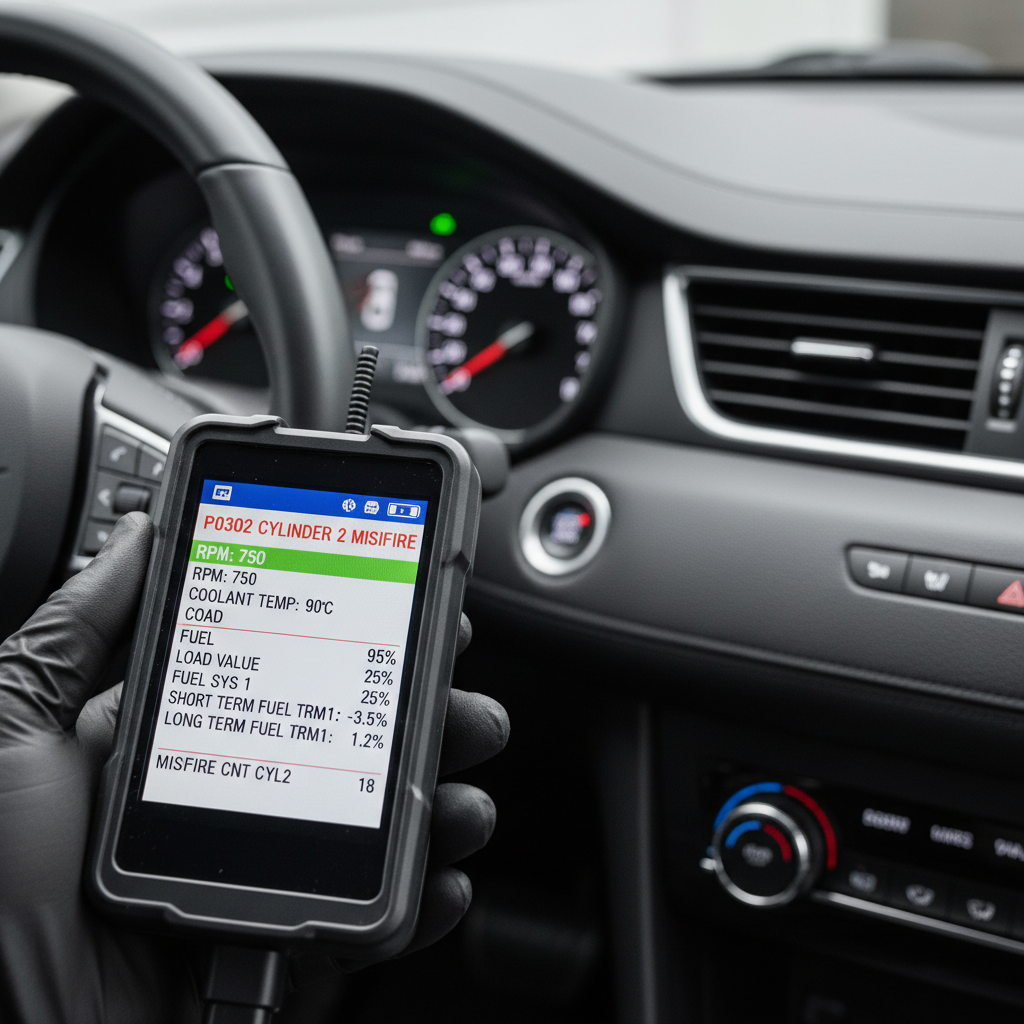
- Scan for codes if possible (parts stores often do this): P0300 random misfire, P0301–P0308 cylinder-specific, plus related codes (fuel trim, MAF, O2, etc.).
If you can capture freeze-frame data or note RPM/load when it happens, that’s gold for a technician and still helpful for DIY.
Most likely causes (and what typically fixes them)
Below is a reality-based map: what fails under load most often, what you’ll notice, and the usual next move. Not every car follows the same script, but this keeps you out of the “random parts cannon” zone.
| Likely cause | Typical clue under load | Practical next step |
|---|---|---|
| Worn spark plugs / incorrect gap | Hesitation during acceleration, worse at higher gear | Inspect plugs, verify correct part number and gap, replace if worn |
| Weak ignition coil / coil-on-plug boot | Single-cylinder code (P030X) or misfire when hot | Swap coil to another cylinder and see if the code follows |
| Fuel pressure drop (pump, filter, regulator) | Misfire at sustained load, may feel like “running out of breath” | Test fuel pressure under load if possible, check service history |
| Vacuum/boost leak (intake hose, PCV, intercooler piping) | Lean codes, whistle/hiss, misfire during tip-in throttle | Inspect hoses and clamps, smoke test if available |
| Dirty/biased MAF sensor or intake restriction | Sluggish response, odd fuel trims, may improve if you ease off throttle | Check air filter, inspect intake ducting, clean MAF with proper cleaner |
| Fuel injector issue (clogged, weak, electrical) | Cylinder-specific misfire that returns after plugs/coil | Listen for injector tick, check connector, consider balance/flow test |
| EGR or carbon buildup (some engines) | Stumble at steady cruise or light-to-mid load | Confirm with scan data; cleaning is engine-specific |
Step-by-step: how to fix a car engine misfire under load (without guessing)
How to fix car engine misfire under load is easier when you follow a narrow sequence: verify, isolate, then replace or repair. These steps assume a gasoline engine; diesels can misfire too, but diagnosis often differs.
1) Start with codes and basic visual checks
- Scan codes (even a basic reader helps). Write them down before clearing anything.
- Open the hood and look for obvious issues: loose coil connectors, cracked intake tube after the MAF, disconnected vacuum lines, oil in spark plug wells.
- Check the air filter and intake ducting. A collapsed duct or poorly seated filter can skew airflow readings.
2) If you have a cylinder-specific code (P0301–P0308), do the coil swap test
This is one of the cleanest DIY isolation tests on coil-on-plug engines.
- Move the coil from the misfiring cylinder to another cylinder.
- Clear codes and drive gently until the misfire returns.
- If the misfire code follows the coil, the coil or boot is a strong suspect.
- If it stays on the same cylinder, think plug, injector, compression, or wiring.
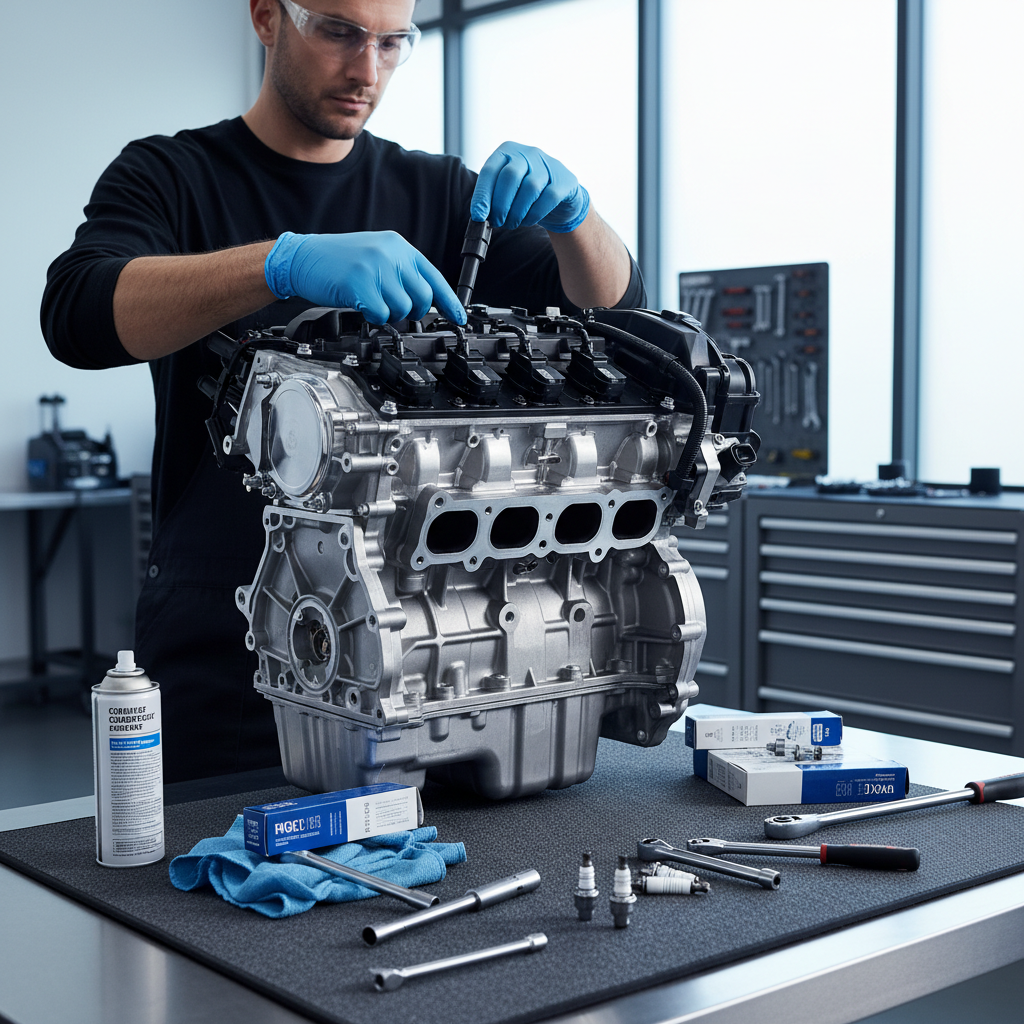
3) Inspect spark plugs with a mechanic’s mindset
Don’t just look for “old.” Look for clues.
- White/cleaned-looking plug tip: can suggest a lean condition on that cylinder.
- Wet fuel smell: cylinder isn’t burning, could be spark or compression.
- Oil fouling: may point to valve cover gasket leak into the well, or internal oil consumption.
- Confirm correct plug type and gap for your engine. Wrong plugs can misfire under load even when new.
According to NGK (spark plug manufacturer), using the correct heat range and design for the application matters because it affects ignition stability and fouling resistance under real driving conditions.
4) If it’s random misfire (P0300), check for air and fuel delivery problems
- Vacuum leak checks: look for cracked PCV hoses, loose clamps, brittle elbows, and intake manifold gasket seepage. Many small leaks behave worse at certain throttle angles.
- MAF sensor: if it’s contaminated, it can miscalculate airflow, especially during acceleration. Use only MAF-specific cleaner, and let it fully dry.
- Fuel pressure: a weak pump can look “fine” at idle and fail under load. If you can’t measure pressure, pay attention to patterns like misfire after long pulls or at higher speeds.
5) Don’t ignore wiring and grounds
It’s not glamorous, but intermittent under-load misfire sometimes comes from a loose coil connector, chafed harness, or poor engine ground that shows up when vibration increases.
- Check coil and injector connectors for broken locks or corrosion.
- Look for harness rubbing near the valve cover or brackets.
- If the battery terminals are loose or heavily corroded, fix that first.
Practical “fix paths” based on your scenario
If you’re trying to get the car reliable quickly, pick the path that matches your symptoms and evidence. This keeps you from mixing three partial diagnoses into one confusing outcome.
Scenario A: Single-cylinder misfire under load
- Do coil swap test and plug inspection.
- Replace plug(s) if worn or wrong type, then re-evaluate.
- If coil test points to coil, replace that coil (and consider boots if separate).
- If it still returns on the same cylinder, injector testing or compression/leak-down becomes the next logical step.
Scenario B: Random misfire mainly during acceleration
- Inspect intake ducting after the MAF, check for cracks and loose clamps.
- Clean MAF (only if appropriate for your vehicle; some sensors are delicate).
- Check for vacuum leaks and PCV issues.
- If symptoms persist, consider fuel pressure testing and looking at fuel trims on a scan tool.
Scenario C: Misfire shows up on long hills or high-speed pulls
- Ignition breakdown under high cylinder pressure is common: plugs/coil first.
- If ignition checks out, fuel delivery becomes more likely, especially if the car feels like it “runs out of power.”
- On turbo cars, pressure leaks (charge pipes, intercooler couplers) can mimic misfire.
Common mistakes that waste money (and sometimes make it worse)
- Replacing parts without a test: coils, plugs, injectors, and sensors add up fast. One quick swap test can save a lot.
- Ignoring the “under load” clue: idling in the driveway won’t reproduce it, so you need scan data or a controlled road test.
- Clearing codes too early: you lose freeze-frame info that tells you RPM, load, and temperature at failure.
- Using the wrong spark plugs: correct heat range and design matter; “it fits” is not the same as “it works under load.”
- Over-cleaning sensors: throttle body and MAF cleaning can help, but aggressive cleaning or wrong chemicals can create new problems.
When you should stop DIY and get professional diagnostics
How to fix car engine misfire under load sometimes crosses into tests that need proper tools, and it’s okay to hand it off. A shop with a capable scan tool can watch misfire counters, fuel trims, and load in real time, which often shortens the path.
- Flashing check engine light that returns quickly under light throttle.
- Misfire plus raw fuel smell, catalyst efficiency codes, or obvious overheating symptoms.
- Repeated cylinder-specific misfire after plugs and coil are confirmed good.
- Suspicion of compression problems (low compression, burnt valve, head gasket concerns). These require compression or leak-down testing.
- Fuel pressure testing needs special equipment, and fuel systems involve fire risk; if you’re not comfortable, get help.
According to NHTSA, addressing drivability issues that reduce power or cause hesitation can be a safety factor in traffic, especially during merging or passing; if the car hesitates unpredictably, consider limiting driving until diagnosed.
Key takeaways and a simple action plan
If you’re chasing a stumble on hills or during hard acceleration, treat it as a system problem, not a single “magic part.” Start with the evidence, then move in a straight line.
- Get codes and keep them before clearing.
- If it’s P030X, do coil swap and plug inspection first, it’s the quickest isolation step.
- If it’s P0300, look for air leaks, MAF issues, and fuel delivery limits that show up under demand.
- When symptoms escalate (flashing CEL), reduce load and consider professional diagnostics.
If you want one next move today: scan the car, note whether it’s random or cylinder-specific, then pick the matching fix path above. That alone usually cuts the time-to-fix in half.
FAQ
Why does my car only misfire when accelerating, not at idle?
Under acceleration, cylinder pressure rises and the ignition system must work harder. Weak coils, worn plugs, or marginal fuel pressure can behave fine at idle but break down under load.
Can low fuel pressure cause a misfire under load?
Yes, in many cases it can. A pump may maintain idle pressure but fail to keep up during sustained demand, which can create a lean condition and misfire, especially on hills or high-speed pulls.
Is it safe to drive with a misfire under load?
It depends on severity. If the check engine light flashes, it’s a sign the misfire rate is high enough that catalyst damage is possible, so reducing load and seeking service soon is a safer approach.
How do I know if it’s a bad coil or a bad spark plug?
A coil swap test is usually the cleanest clue: if the misfire code follows the coil, the coil is likely involved. Plug condition and correct part number also matter; wrong or worn plugs can misfire under load even with a good coil.
Could a dirty MAF sensor cause misfire under load?
It can contribute, especially if it causes incorrect airflow readings during throttle changes. The bigger tell is often odd fuel trims or drivability issues across multiple cylinders rather than one cylinder only.
What if I replaced plugs and coils and it still misfires?
Then it’s time to look at fuel injectors, wiring, air leaks, and mechanical health. A cylinder that keeps misfiring may need injector testing or compression/leak-down testing to confirm the root cause.
Can a vacuum leak cause misfire only under load?
Sometimes. Small leaks can be most disruptive at specific throttle angles or during tip-in, and they often come with lean codes or high positive fuel trims on a scan tool.
Will a fuel injector cleaner fix misfire under load?
Occasionally it helps if the issue is mild deposit buildup, but it’s not a reliable fix for an electrical injector fault, a weak pump, or ignition breakdown. If you try it, treat it as a test, not a guarantee.
If you’re trying to fix the issue fast but don’t want to keep swapping parts, a good next step is to pull codes and basic live data (misfire counters, fuel trims) and use that to decide whether you need ignition parts, an air-leak check, or a fuel pressure test, if you’d rather have a more hands-off route, many local shops can diagnose under-load misfires with a road test and scan tool data in one visit.