
How to Remove Bird Droppings from Car Paint Without Damaging It
how to remove bird droppings from car paint safely comes down to two things, speed and the right technique, because the longer it sits, the more likely it is to stain or etch your clear coat.
If you have ever wiped a dried splat with a paper towel and found a faint scratchy haze afterward, you already know why this matters, bird waste is gritty, and the acids can bite into the finish, especially in heat.
The good news is you usually do not need fancy gear, you need gentle lubrication, soft towels, and a process that avoids grinding debris into paint. Below is a practical, real-world approach that works for daily drivers and garage-kept cars alike.
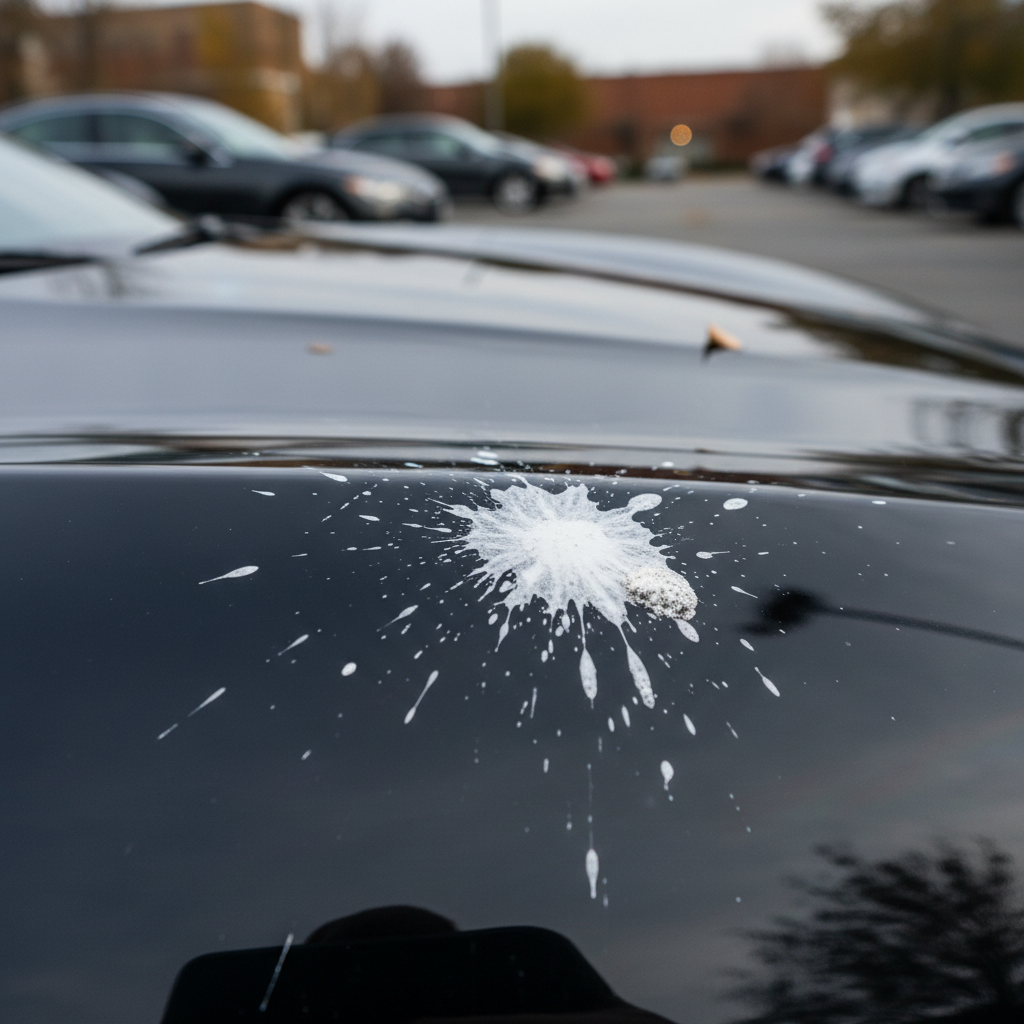
Why bird droppings can damage car paint (and why timing matters)
Bird droppings are not just “gross,” they are chemically active and often abrasive. On a modern clear-coated finish, the clear coat is your sacrificial layer, but it is still thin.
- Acidic/enzymatic residue: many droppings can soften or stain the clear coat, the risk goes up in sun and high temperatures.
- Grit and undigested bits: wiping dry can drag small particles across paint and create micro-marring.
- Heat bakes it on: on a hot panel, moisture evaporates fast, residue concentrates, and removal becomes harder.
According to the U.S. Environmental Protection Agency (EPA), bird droppings can carry harmful pathogens, so you should treat cleanup as a hygiene task too, especially if you have cuts on your hands.
Quick self-check: what kind of mess are you dealing with?
Before you grab anything, take ten seconds and decide what situation you are in, this helps you avoid overdoing it and causing swirls.
- Fresh and wet: looks glossy, wipes easier, lowest risk if you use lubrication.
- Dried but not baked: crusty edges, still removable with a soak.
- Baked-on in sun: hard, chalky, sometimes leaves a “ring” even after removal.
- On matte paint or vinyl wrap: needs extra caution, many chemicals and waxes are not wrap-safe.
- Already etched: after cleanup you see a dull spot or outline, that is paint/clear-coat damage, not leftover dirt.
If you suspect etching, do not keep scrubbing “until it disappears,” that usually makes the spot larger.
What you need (and what to avoid) for safe removal
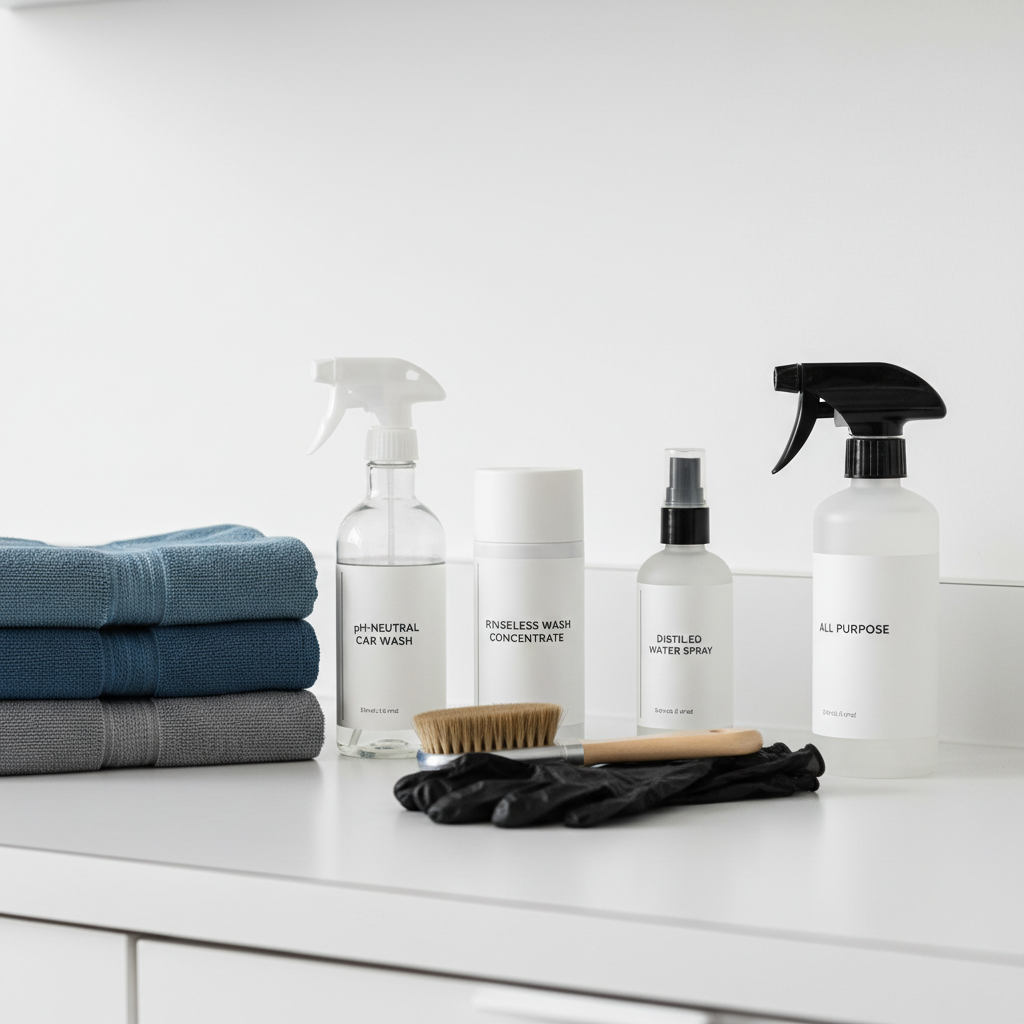
You can handle most incidents with a small “trunk kit.” If you drive in areas with lots of trees, this kit pays for itself in saved paint.
Safe basics
- Nitrile gloves and optional eye protection
- Microfiber towels (plush, clean, no fabric softener)
- Lubricant: quick detailer, rinseless wash mix, or pH-neutral car wash solution in a spray bottle
- Distilled water (helpful if your tap water is very hard)
- Soft plastic bag (yes, really) for the “baggie test” after cleanup
Common things that cause damage
- Paper towels, napkins, old T-shirts, anything that drags grit
- Household cleaners like glass cleaner with ammonia, bleach, or strong degreasers, these can dull trim and compromise protection layers
- Abrasive pads and “magic eraser” style melamine sponges
- Dry wiping, even if the droppings look “dusty”
Step-by-step: how to remove bird droppings from car paint safely
When people ask how to remove bird droppings from car paint safely, the biggest mistake is trying to be fast by rubbing harder, the faster move is soaking and lifting.
1) Move to shade and cool the panel
If possible, park out of direct sun and let the panel cool for a few minutes. A hot hood turns your cleaner into evaporation, not lubrication.
2) Pre-soak generously
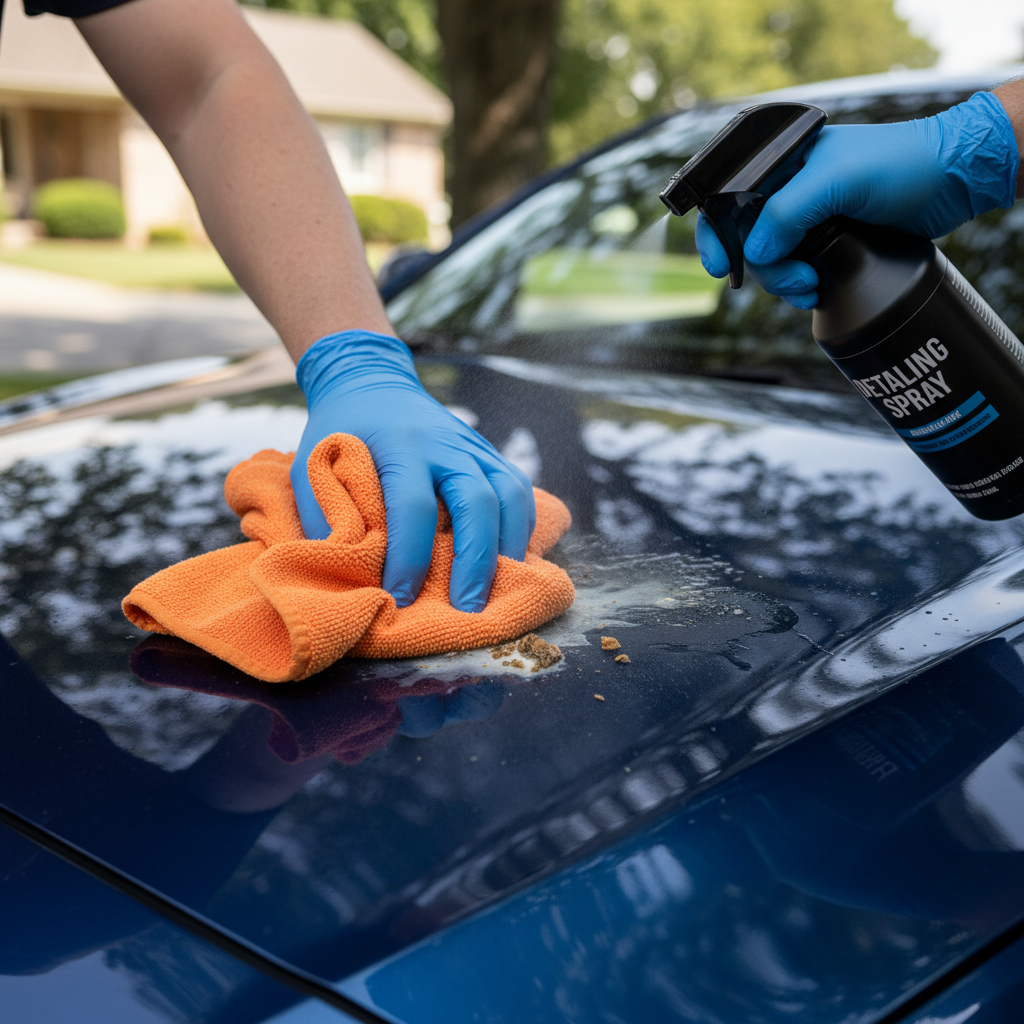
Spray your lubricant directly on the dropping and around it, then wait 60–120 seconds. For thick or very dry mess, place a wet microfiber over it like a compress and let it soften.
3) Lift, do not scrub
Fold a microfiber into quarters, lightly wipe in one direction, and use a clean side for each pass. If it resists, re-soak and wait again, that extra minute often prevents swirls.
4) Spot-rinse (even if you are not doing a full wash)
If you have a water bottle or a low-pressure sprayer, rinse the area to carry away loosened grit, then lightly blot dry with a clean microfiber.
5) Inspect by feel, then decide the next move
After it looks clean, put your hand in a thin plastic bag and gently glide it over the area. If it feels rough, there may be bonded residue, at that point use a dedicated, paint-safe method rather than more wiping.
What to do if a stain or etched outline remains
Sometimes you remove everything and the ghost outline stays, that is common on dark colors and on panels that sat in sun. It does not automatically mean you ruined anything, but it does mean the clear coat took a hit.
- Light staining: a gentle cleaner designed for automotive paint may help, follow product instructions and test on a small area.
- Minor etching: a mild polish can reduce the mark, but polishing removes a small amount of clear coat, so keep it conservative.
- Deep etching: you may need machine polishing, wet sanding, or repainting in severe cases, do not chase it by hand for an hour.
According to the International Detailing Association (IDA), proper paint correction is a controlled process, and aggressive approaches can remove too much clear coat, if you are unsure, a reputable detailer can assess it quickly.
Best methods by situation (quick comparison table)
If you want a quick decision tool, use this table and pick the least aggressive option that fits your situation.
| Situation | What to use | What to avoid | Notes |
|---|---|---|---|
| Fresh droppings | Detail spray or rinseless wash + microfiber | Dry wiping | Lift in one direction, rotate towel sides often |
| Dried droppings | Wet compress for 2–5 minutes, then wipe | Scrubbing, stiff brushes | Patience beats pressure |
| Baked-on, hot panel earlier | Cool panel + repeated soak cycles | Solvents not meant for paint | Expect possible etching even after removal |
| Matte paint / satin PPF / vinyl wrap | Wrap-safe waterless wash, very soft microfiber | Polish, wax that adds gloss, strong APC | Test small area first, follow wrap manufacturer guidance |
| Etched outline after cleanup | Light polish or pro inspection | Heavy compound by hand “until gone” | Clear coat thickness is limited, go conservative |
Prevention tips that actually reduce future paint damage
Prevention is not just “park somewhere else,” real life often means you park where you can. The goal is reducing how strongly droppings bond and how long they sit.
- Keep a small trunk kit: microfiber + detail spray lets you act before stains form.
- Use a quality paint protection layer: wax, sealant, or ceramic coating can make cleanup easier, though it will not make you immune to etching.
- Wash more often in peak bird season: if your car sits under trees, a weekly wash is usually kinder than occasional aggressive scrubbing.
- Be careful with covers: car covers can trap grit and rub paint, if you use one, make sure the car is clean before covering.
Key takeaways (so you do not overthink it)
- Soak first, wipe second, most damage comes from dry friction.
- Microfiber and lubrication beat paper towels every time.
- Ghost rings often mean etching, not leftover dirt, stop scrubbing and reassess.
- Hygiene matters, wear gloves and wash hands afterward.
Conclusion: a safe routine you can repeat
how to remove bird droppings from car paint safely is mostly about resisting the urge to “just wipe it off,” cool the surface, soak, lift gently, then reassess before you escalate. If you clean it early and use the right towel, you usually avoid the stains and swirls that make this such an annoying problem.
If you want one simple action today, build a small cleanup kit for your trunk and use it the same day you spot a dropping, your future self will thank you when the paint still looks crisp under sunlight.
FAQ
Can bird droppings permanently damage car paint?
Yes, they can, especially if they sit in hot sun. Sometimes you remove the mess and an outline remains because the clear coat etched, at that point cleaning harder will not reverse it.
Is it safe to use glass cleaner or household cleaners to remove droppings?
Usually not a great idea, many household products are not formulated for automotive clear coat and can dull trim or strip protection. A pH-neutral car wash solution or detail spray is the safer default.
How long can bird droppings sit before causing etching?
It varies by temperature, paint condition, and what the bird ate. In many cases, hours in direct sun can be enough to leave a mark, so earlier is better even if you can only do a quick spot clean.
What if I only have water and a towel available?
Use plenty of water to soften it, then blot and lift gently rather than rubbing. If the residue feels gritty or stubborn, stop and wait until you have a proper lubricant and microfiber.
Do I need to clay the area after removing droppings?
Not always. Clay can help if the surface feels rough after cleaning, but it can also cause marring if used without enough lubrication, many drivers do better with a gentle chemical cleaner or professional help if unsure.
Will a ceramic coating prevent bird droppings damage?
It can make removal easier and buy you a little time, but it does not guarantee zero etching. Droppings can still damage the coating or mark the clear coat if left long enough.
When should I go to a professional detailer?
If you see a dull crater-like spot, repeated outlines, or the area looks worse after DIY attempts, a detailer can measure risk and choose a conservative correction approach. If you have a matte finish, wrap, or fresh repaint, professional guidance is often worth it.
If you want a more “set it and forget it” approach
If you are dealing with frequent bird activity where you park, you may prefer a routine that reduces how often you have to spot-clean, a detailer can recommend a realistic protection option for your paint type and your habits, and also show you a safe maintenance process that fits your schedule.