
how to fix car exhaust smoke white black blue starts with one practical idea: exhaust color is a clue, but temperature, smell, and when it happens matter just as much.
If you ignore it, the “smoke” can be the first visible sign of problems that get expensive fast, like coolant entering the cylinders, oil burning, or an overly rich fuel mixture washing down cylinder walls.
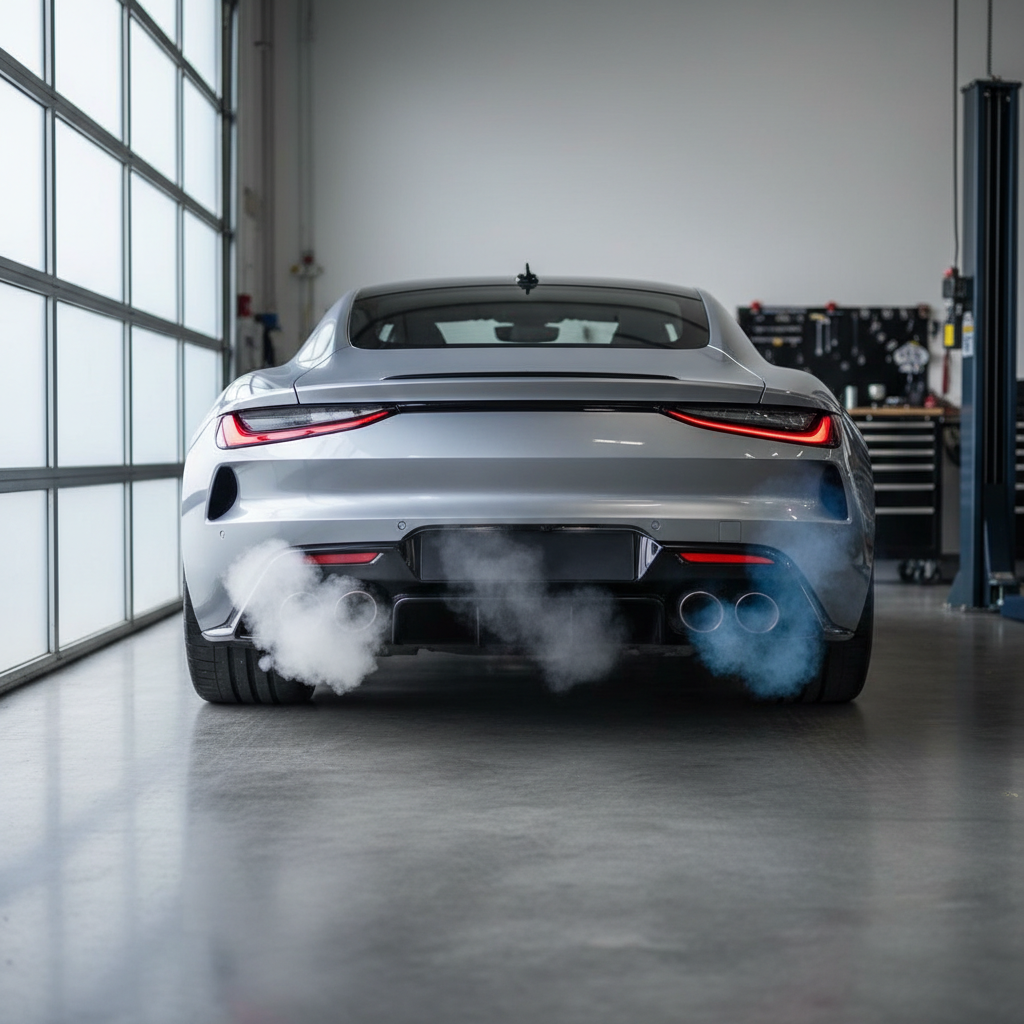
Also, plenty of people misread normal water vapor on a cold morning as a serious issue, then miss the real warning signs later. This guide helps you separate “normal condensation” from smoke that needs action, and it gives you a realistic repair path for each color.
Quick decode: what white, black, and blue exhaust usually mean
Before chasing parts, get clear on what you’re seeing. A quick color-to-cause map saves a lot of guessing and prevents “parts cannon” repairs.
| Smoke color | Most common meaning | Typical smell | When it shows up | Risk level |
|---|---|---|---|---|
| White | Condensation (normal) or coolant burning | Sweet (coolant) or mostly none (condensation) | Cold start; coolant issue often persists warm | Low to high (depends) |
| Black | Too much fuel (rich mix) or restricted air | Gasoline, “sooty” | Acceleration, load, sometimes idle | Medium |
| Blue / bluish-gray | Oil burning | Burnt oil | Startup, decel, or constant (varies by cause) | Medium to high |
- Key point: A “cloud” that disappears quickly on a cold start can be normal water vapor.
- Key point: Smoke that continues after the engine is warm usually deserves diagnosis soon.
Before repairs: a 10-minute self-check that prevents wrong fixes
Do this once, write it down, and you’ll diagnose faster whether you DIY or bring it to a shop. According to EPA, proper vehicle maintenance helps reduce emissions, so it’s worth treating visible smoke as a maintenance signal, not just an annoyance.
- When does it happen? Cold start, warm idle, hard acceleration, cruising, deceleration downhill.
- How long does it last? Seconds, minutes, or constant.
- Smell check (carefully): sweet, fuel-heavy, burnt oil, or “wet air.”
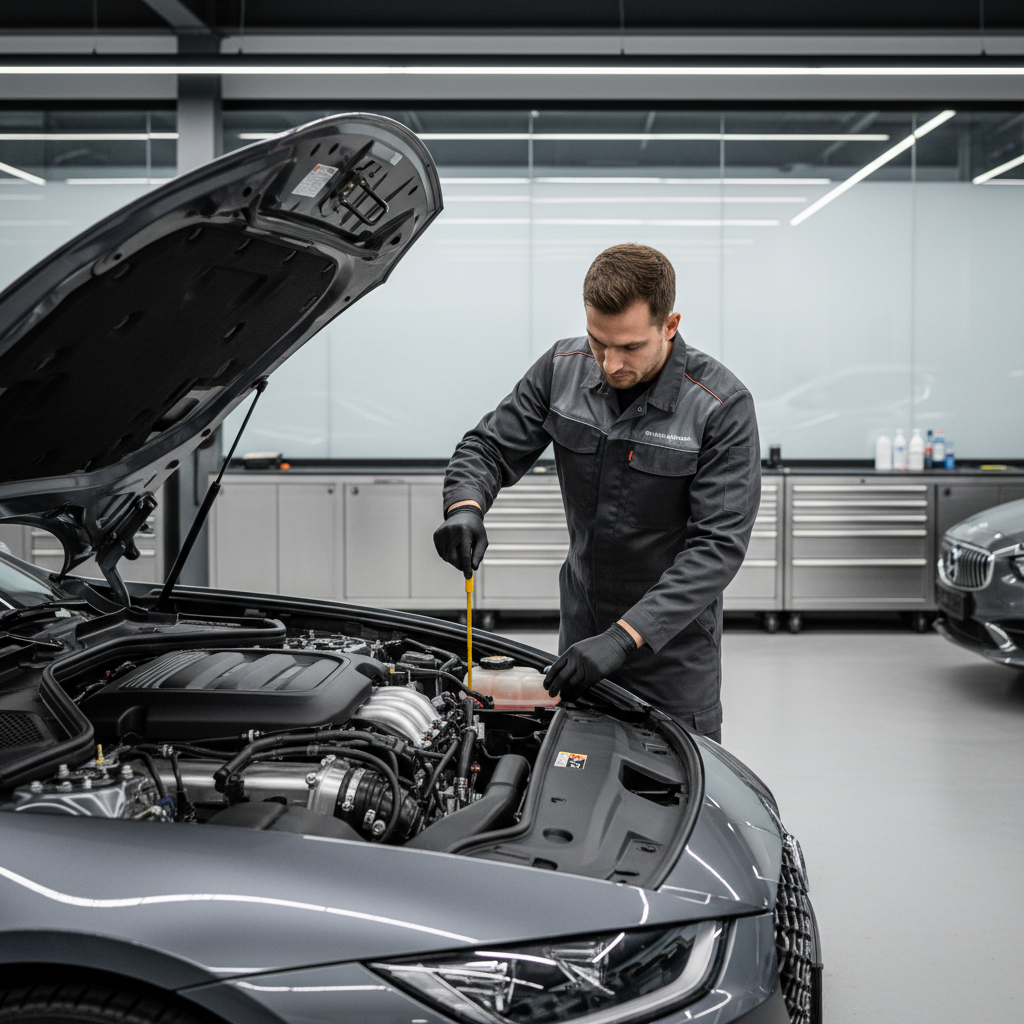
- Fluid levels: engine oil level and coolant level, then re-check after a few drives.
- Tailpipe residue: dry soot suggests rich fueling, oily residue suggests oil burning.
- Dash lights: check engine light, temperature warnings, low oil pressure warnings.
If the engine temperature climbs, coolant level drops, or the check engine light flashes, treat it as “stop and diagnose,” not “drive and see.” Many failures get worse under load.
How to fix white exhaust smoke (and when it’s not a problem)
White “smoke” splits into two buckets: harmless condensation or actual coolant/steam from inside the engine. The fix depends on which one you have.
When it’s normal condensation
- Happens on cold start, especially in cool or humid weather
- Gets lighter and disappears as the exhaust warms
- No coolant loss, no overheating, no sweet smell
In that case, there’s nothing to repair. Just confirm coolant stays steady over the next week.
When it’s likely coolant burning (needs attention)
- White smoke keeps going even after the engine is fully warm
- Sweet smell, misfires, rough idle, or “steam” that hangs in the air
- Coolant level drops with no external leak
Common causes include a leaking head gasket, a warped cylinder head, a cracked head, or (less often) intake gasket issues on certain engine designs.
Practical repair path:
- Step 1: Pressure-test the cooling system and look for external leaks first, because an obvious hose or radiator leak is cheaper than internal engine work.
- Step 2: Scan OBD-II codes and check misfire counts, many coolant leaks into a cylinder trigger misfire codes.
- Step 3: Ask for a combustion-gas-in-coolant test (shops often call it a block test) plus compression or leak-down testing to confirm internal leakage.
- Step 4: If confirmed, plan repair based on engine value and condition, head gasket replacement sometimes makes sense, sometimes a reman engine is more rational.
How to fix black exhaust smoke (rich fuel, air restriction, sensor issues)
Black smoke usually means the engine runs rich, too much fuel for the available air. That can be an “air in” problem, a “fuel in” problem, or a bad reading that makes the computer overfuel.
Common real-world causes
- Dirty/clogged air filter or blocked intake path
- Faulty MAF sensor (mass airflow sensor) or intake leaks downstream
- Stuck injector, leaking injector seals, or high fuel pressure
- Bad upstream O2 sensor reporting lean when it’s not
- EVAP purge valve stuck open feeding excess vapor at idle
Fix steps that usually make sense (in order)
- Check the basics: Replace an obviously dirty air filter, verify the intake duct has no collapse or blockage.
- Scan for codes and fuel trims: Short-term and long-term fuel trims can point to overfueling vs airflow measurement problems. If you don’t have a scan tool, many parts stores can read codes, but interpreting trims may still require a better scanner.
- Clean or test the MAF the right way: Use MAF-specific cleaner only, and don’t touch the element. If trims don’t improve, testing beats guesswork.
- Inspect spark plugs: Sooty plugs back up the “rich” story and help identify a specific cylinder if one injector leaks.
Worth saying out loud: black smoke plus poor MPG can also happen after someone installs the wrong parts, like an incorrect air filter housing, mismatched sensor, or aftermarket tune. If the problem started after a change, start there.

How to fix blue exhaust smoke (oil burning causes and targeted repairs)
Blue or bluish-gray smoke often points to oil getting into the combustion chamber. The “when” matters, because it narrows the likely entry point.
Use timing to narrow the cause
- Puff on startup, then clears: valve stem seals often suspect, oil drips into cylinders overnight.
- Smoke on deceleration: high manifold vacuum can pull oil past worn valve guides/seals.
- Smoke during acceleration/load: piston rings, cylinder wear, or turbo seals (if equipped).
- Constant blue smoke: more severe wear or a PCV problem pulling oil continuously.
Fix steps that are realistic for most owners
- Verify oil level and correct viscosity: overfilled oil can get whipped into the intake through PCV pathways.
- Check the PCV system: a stuck PCV valve or clogged breather can raise crankcase pressure and push oil where it shouldn’t go.
- Look for oil in the intake: excessive oil film in the intake tube or intercooler piping (turbo engines) is a clue, though some film can be normal.
- Compression/leak-down test: this helps confirm rings/cylinder wear before you spend on major repairs.
If tests suggest ring or cylinder wear, the “fix” can range from living with it and topping off oil, to rebuilding, to engine replacement. There isn’t a universal best option, it depends on mileage, vehicle value, and how long you need it to last.
Step-by-step diagnosis workflow (a simple decision tree)
If you’re trying to be efficient, use this order. It keeps you from chasing rare causes first.
- Step 1: Confirm color and conditions (cold vs warm, idle vs load).
- Step 2: Check fluid levels and look for obvious leaks.
- Step 3: Pull OBD-II codes and freeze-frame data, then decide whether you’re in fuel/air, oil, or coolant territory.
- Step 4: Do the least-invasive confirmations (air filter, PCV check, cooling pressure test).
- Step 5: Only then commit to bigger work (injector testing, head gasket confirmation, leak-down test).
Quick safety note: if you suspect coolant burning and the engine starts overheating, it’s usually safer to stop driving and arrange a tow. Continuing can warp aluminum heads quickly in some engines.
Common mistakes that waste money (and how to avoid them)
- Assuming white smoke always means head gasket: cold-start vapor is normal in many climates, verify coolant loss before panic.
- Replacing O2 sensors because of black smoke: sensors can be a symptom, not the cause, rich fueling can kill them.
- Using “stop smoke” additives as a primary fix: they might mask issues briefly, but they rarely solve mechanical wear, and they can complicate later diagnosis.
- Ignoring oil consumption because the car still drives fine: low oil can damage the engine, and oil burning can harm catalytic converters over time.
When to get a pro diagnosis (and what to ask for)
Some checks are easy at home, but a few tests are worth paying for because they prevent expensive guessing. According to NHTSA, safety-related defects and warning signs should be addressed promptly, and heavy smoke plus warning lights can signal a condition that deserves immediate attention.
- Go to a shop soon if smoke is constant when warm, fluids drop, the check engine light flashes, or the engine overheats.
- Ask for specific tests rather than “just fix it,” such as cooling system pressure test, block test (combustion gas test), injector balance test, compression and leak-down testing.
- Ask for evidence like plug photos, fuel trim screenshots, or pressure readings, reputable shops usually don’t mind sharing basics.
One more reality check, if your vehicle is older and repair costs approach the car’s value, it can be smarter to focus on “safe and stable” rather than “perfect,” but that call is personal and budget-driven.
Conclusion: what to do today if your car is smoking
how to fix car exhaust smoke white black blue comes down to identifying the color correctly, then confirming the underlying system with one or two solid checks instead of random parts swaps. White that disappears warm is often normal, black usually points to fueling or airflow issues, blue typically means oil is getting burned.
If you want a clear next step, do a quick fluid-level baseline and pull OBD-II codes today, then decide whether you’re dealing with coolant, fuel/air, or oil. If overheating, rapid coolant loss, or flashing check engine light shows up, scheduling a professional diagnosis quickly tends to cost less than “driving through it.”
FAQ
Why do I see white smoke only on cold starts?
In many cases it’s condensation turning into water vapor inside the exhaust. If it fades as the engine warms and coolant level stays steady, it’s usually not a repair situation.
How can I tell white vapor from coolant burning?
Coolant burning often continues when the engine is fully warm and may come with a sweet smell, rough running, or unexplained coolant loss. A cooling pressure test and combustion-gas test can confirm.
Does black smoke always mean bad injectors?
Not always. A clogged air filter, a MAF sensor reading wrong, or fuel pressure issues can all cause rich running. It’s better to scan fuel trims before buying injectors.
Can a bad PCV valve cause blue smoke?
Yes, a stuck or clogged PCV system can pull oil mist into the intake or increase crankcase pressure. It’s one of the cheaper checks before assuming worn rings.
Is blue smoke after an oil change a sign the shop messed up?
Sometimes it’s as simple as overfilled oil or the wrong viscosity, but it can also be coincidence that reveals an existing issue. Check the level on the dipstick and correct it first.
Will thicker oil stop blue smoke?
It might reduce visible smoke in some worn engines, but it can also create cold-start lubrication tradeoffs. It’s a “manage symptoms” move, not a guaranteed fix, and a mechanic can advise based on your engine.
Can I keep driving if my car is smoking?
Light condensation is usually fine, but persistent smoke, overheating, or warning lights suggest higher risk. If you suspect coolant burning or the engine temperature rises, stopping and arranging help is often the safer call.
If you want a simpler path
If you’re dealing with recurring exhaust smoke and you’d rather avoid trial-and-error, consider booking a diagnostic visit where the shop can document fuel trims, pressure tests, and compression results, then you can decide which repair is worth doing based on evidence instead of guesses.