
how to diagnose car bad catalytic converter symptoms usually comes down to separating “engine running wrong” from “exhaust treatment failing,” because the same few clues can point to very different fixes.
If you guess, you can burn money fast: oxygen sensors, spark plugs, even a whole converter when the real issue is a misfire or an exhaust leak. The good news is you can do a lot of useful checking at home with your senses, a basic scan tool, and a little patience.
I’ll walk through the symptoms that actually matter, a quick self-check list, a simple decision table, and a practical path to confirm whether the converter is the problem or just the victim.
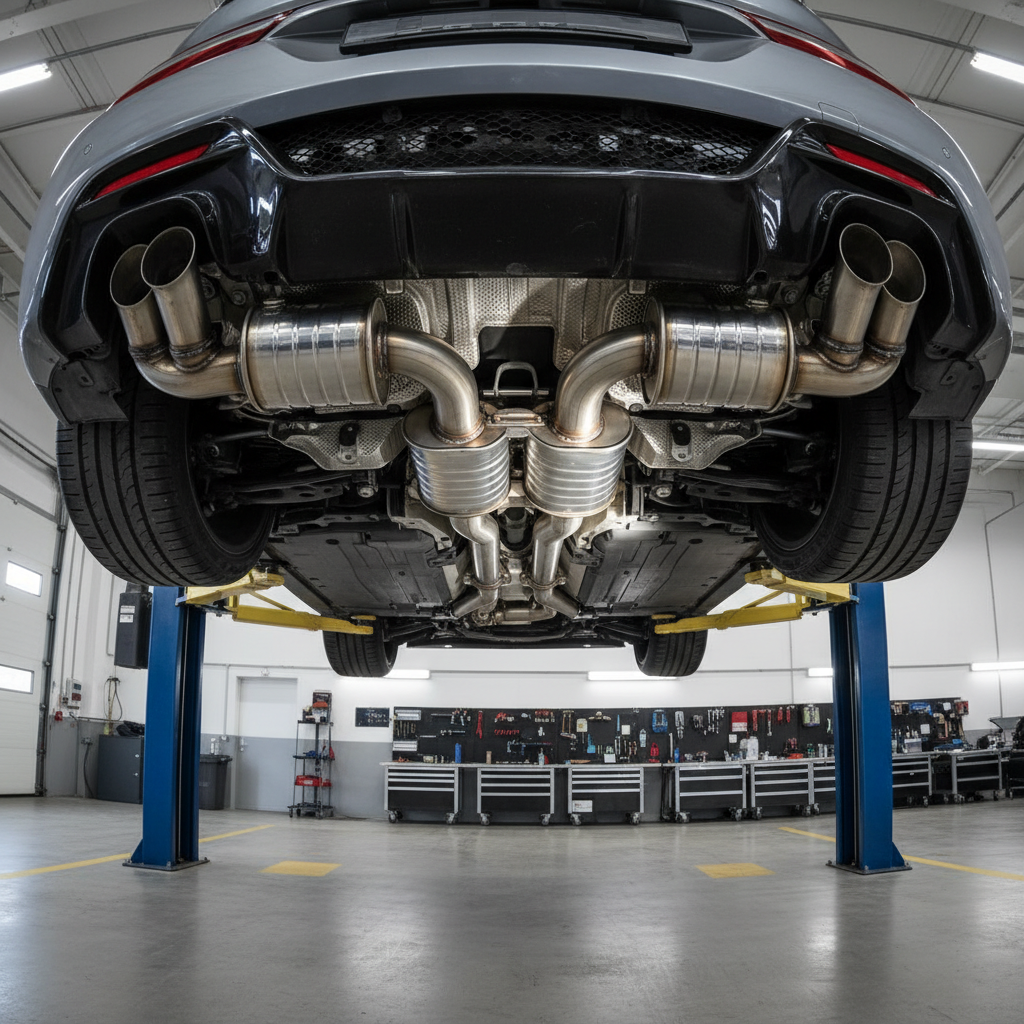
What a catalytic converter does (and why failures look confusing)
The catalytic converter sits in the exhaust stream and uses precious-metal coatings to help convert harmful gases into less harmful ones. When it can’t do that job, you might see emissions-related trouble codes, bad smells, or power loss.
But here’s the catch: converters often fail because something upstream harms them, like long-term misfires, running too rich, oil burning, or coolant entering the exhaust. So the converter can be both a symptom and a casualty.
According to the U.S. Environmental Protection Agency (EPA), catalytic converters are central to controlling vehicle emissions, and malfunctions commonly show up through emissions diagnostics like the check engine light.
Most common bad catalytic converter symptoms (real-world patterns)
These are the symptoms that tend to show up most often when a converter is clogged, melted, or chemically “washed out.” One sign alone rarely proves it, but clusters matter.
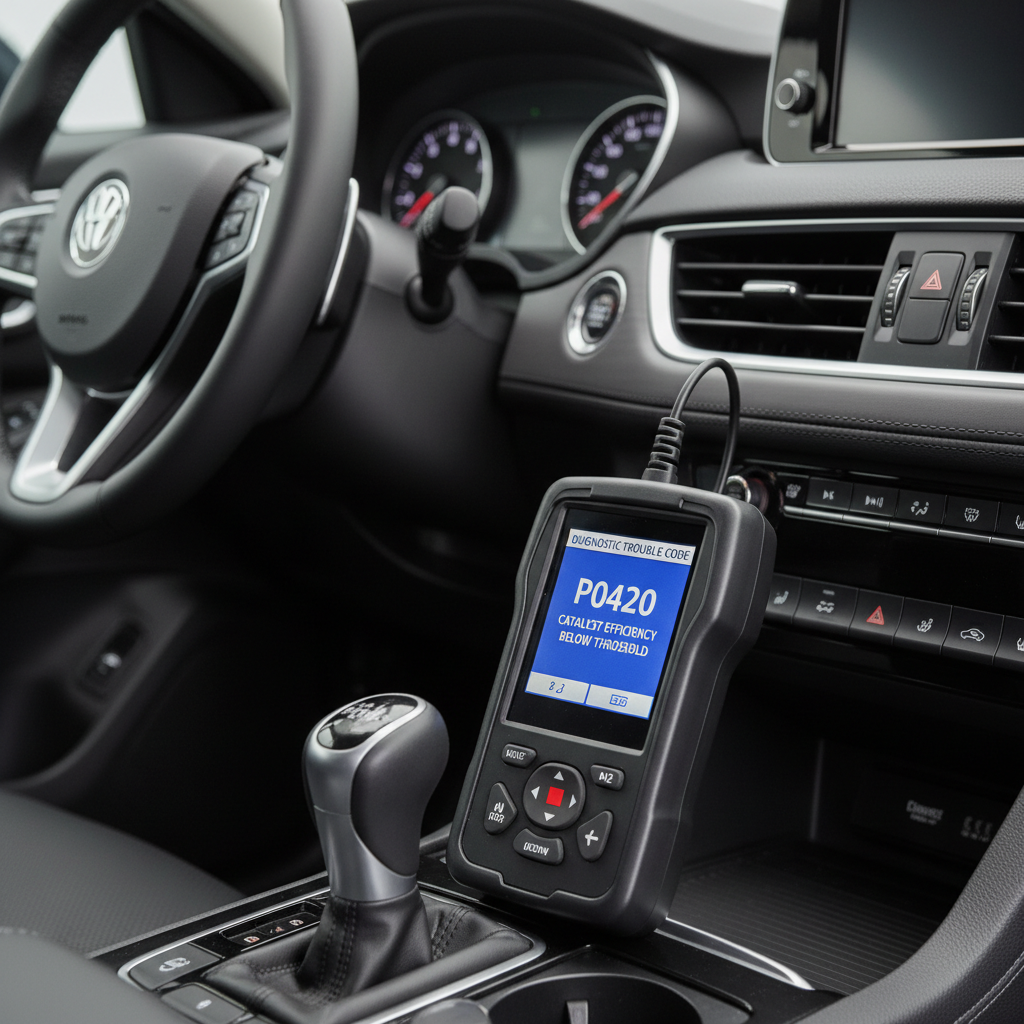
- Check Engine Light with catalyst efficiency codes (commonly P0420/P0430). This is common, but not a slam dunk.
- Loss of power, especially at higher RPM or when climbing hills, sometimes feels like the car “can’t breathe.”
- Rattling from under the car (broken substrate inside the converter), often louder at startup or when tapping the exhaust lightly.
- Sulfur or “rotten egg” smell. This can happen, though fuel quality and other issues can also contribute.
- Poor fuel economy when exhaust restriction increases or fuel trims shift.
- Heat around the converter area, sometimes accompanied by a burning smell; severe cases can glow red hot.
Key point: If you have strong power loss plus a “whooshy” restricted exhaust feel, that’s more suspicious for clogging than a lone P0420 code.
Quick self-check: are you likely dealing with a bad converter or something else?
Use this as a fast triage before you buy parts. You’re trying to answer one question: is the converter probably failing on its own, or is something else causing the symptoms?
5-minute driveway checks
- Listen for rattles near the converter area when the engine is cold, then again when warm.
- Smell test: persistent sulfur smell after a drive can be a clue, but don’t treat it as proof.
- Tailpipe flow: weak exhaust flow paired with sluggish acceleration can suggest restriction.
- Check for misfire feel (shaking at idle, blinking CEL). Misfires can kill converters quickly.
- Look for obvious exhaust leaks (soot marks, ticking noise) near the manifold or joints.
Scan tool “red flags”
- P0420/P0430: catalyst efficiency below threshold.
- Misfire codes (P0300-P030x): address these before blaming the converter.
- Fuel trim codes (lean/rich): may point to air leaks, MAF issues, fuel delivery problems.
- O2 sensor codes: could be sensor wiring, heater circuits, or a real mixture problem.
A practical diagnosis flow (from easiest to most convincing)
If you’re serious about how to diagnose car bad catalytic converter symptoms, you want to confirm two things: whether the converter is restricted, and whether it’s failing chemically (efficiency) rather than being blamed for another issue.
Step 1: Fix upstream problems first (or you’ll misdiagnose)
Don’t skip this. A converter can throw efficiency codes when the engine runs rich/lean, misfires, or has an exhaust leak before the downstream oxygen sensor.
- If the CEL is blinking, treat it as urgent and avoid driving hard, a misfire can overheat the converter.
- Repair obvious misfires, vacuum leaks, or fuel issues, then clear codes and recheck.
Step 2: Look at live O2 sensor behavior (basic interpretation)
Most cars have an upstream (Sensor 1) and downstream (Sensor 2) O2 sensor per bank. In many cases:
- Upstream O2 should switch rapidly as the engine adjusts fuel.
- Downstream O2 should look steadier if the converter stores oxygen and smooths out exhaust chemistry.
If the downstream sensor graph “mirrors” the upstream a lot, that can support an efficiency problem. Still, sensors and exhaust leaks can fake this pattern.
According to SAE International publications on OBD II catalyst monitoring (industry standards discussions), catalyst efficiency is inferred from upstream/downstream sensor behavior, which is why correct sensor operation and leak-free exhaust matter.
Step 3: Check for restriction (the clogging question)
Restriction tends to create the most noticeable driveability issues. Common methods include:
- Vacuum gauge test: manifold vacuum that drops with steady RPM can hint at exhaust restriction.
- Backpressure test (best done with proper tools): measures pressure ahead of the converter.
- Temperature comparison (carefully): a converter typically runs hotter at the outlet than inlet when working; patterns vary, so don’t treat this alone as definitive.
Because burns and fire risk are real around exhaust components, use caution and consider a shop for temperature/backpressure testing if you’re unsure.
Decision table: symptom → likely causes → what to check next
This table helps keep you from “parts cannon” repairs. Use it as a guide, not a verdict.
| What you notice | Likely causes (examples) | Good next check |
|---|---|---|
| P0420/P0430 only, car drives mostly fine | Aging converter, small exhaust leak, lazy O2 sensor, fuel trim issues | Check for leaks, review fuel trims, verify O2 sensor switching |
| Power loss at higher speeds, feels “plugged up” | Clogged/melted converter, collapsed muffler, crushed pipe | Restriction tests (vacuum/backpressure), inspect exhaust damage |
| Rattle under car, worse on cold start | Broken converter substrate, heat shield loose | Tap test cautiously, inspect shields and mounts |
| Sulfur smell + rich running | Overfueling, misfire, converter overheating | Scan for misfires, check fuel trims, inspect plugs/coils/injectors |
| Converter gets extremely hot | Misfire dumping fuel, timing issues, restricted exhaust | Stop hard driving, diagnose misfire immediately, consider pro help |
Hands-on tips that actually save time (and money)
These are the “small moves” that often clarify the situation quickly.
- Don’t replace the downstream O2 sensor just because of P0420. It can fail, sure, but it’s also doing its job by reporting what it sees.
- Check for exhaust leaks before the converter. Even a small leak can pull in oxygen and confuse catalyst monitoring.
- Look at fuel trims. Very positive trims may suggest a lean condition; very negative trims may suggest rich running, either can affect catalyst codes.
- Review maintenance history. Long overdue spark plugs or a history of oil consumption increases the odds the converter got contaminated.
Common mistakes when diagnosing converter problems
A lot of frustration comes from treating every symptom as “bad converter.” In reality, the converter often complains last.
- Ignoring misfires: Driving with a misfire can overheat and damage the converter, even if it was fine before.
- Assuming one code equals one part: P0420/P0430 can be triggered by mixture problems or leaks.
- Using “snake oil” cleaners as a main fix: They might help in niche cases, but they won’t repair a melted or broken substrate.
- Replacing the converter without addressing oil/coolant burning: The new unit may fail again.
- Skipping fitment/legal checks: In emissions-regulated states, the replacement type matters.
According to the California Air Resources Board (CARB), emissions-related replacement parts in California often must meet specific requirements, so it’s smart to confirm what’s legal for your state and vehicle before ordering.
When to stop DIY and get professional diagnosis
Some situations are worth handing to a shop, not because you can’t learn them, but because the risk and cost of guessing rises fast.
- Blinking check engine light, severe shaking, or power loss that makes driving unsafe.
- Suspected exhaust restriction that could overheat components, a backpressure test with the right adapter is safer and clearer.
- Repeated catalyst codes after you fixed misfires/leaks and the monitors reset.
- Any sign of coolant in exhaust (sweet smell, overheating, white smoke) or heavy oil burning, these can ruin a converter quickly.
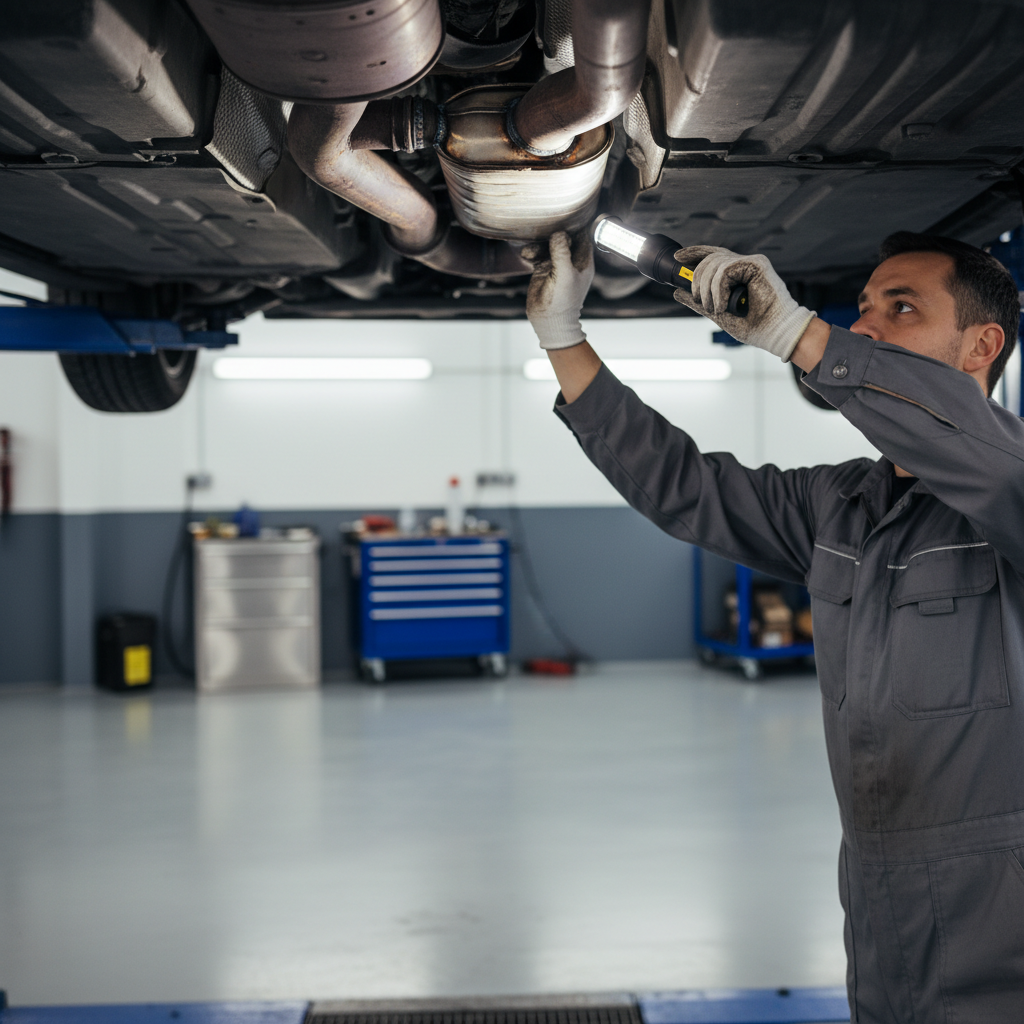
Ask the shop what evidence they used: live O2 data, backpressure readings, smoke test results, and whether they checked for upstream causes. A good answer usually sounds specific, not vague.
Conclusion: a simple, low-regret way to confirm the problem
If you remember one thing about how to diagnose car bad catalytic converter symptoms, make it this: confirm the cause before you buy the converter. Start with codes and obvious upstream issues, then look at O2 sensor behavior and restriction clues, and only then decide whether replacement makes sense.
Your next move can be simple: if you have P0420/P0430 with no misfires and no leaks, schedule a backpressure or professional exhaust inspection, it’s often the fastest way to avoid expensive guesswork.
FAQ
Can a bad oxygen sensor cause catalytic converter symptoms?
Yes, a faulty O2 sensor or wiring can mimic catalyst problems by reporting incorrect readings, but it can also be reporting real issues. If the sensor has heater or circuit codes, address those first.
Does P0420 always mean I need a new catalytic converter?
No. P0420 often points to reduced efficiency, but exhaust leaks, mixture problems, and sensor issues can trigger it. It’s one of the codes where basic confirmation steps save a lot of money.
What does a clogged catalytic converter feel like while driving?
Many drivers describe sluggish acceleration, worse performance at highway speeds, and a feeling that the engine can’t rev freely. In more severe cases, the car may struggle to start or stall.
Is it safe to drive with suspected converter problems?
It depends. Mild efficiency codes with normal drivability may be okay short-term, but a blinking CEL, strong sulfur smell, overheating, or major power loss suggests you should limit driving and get it checked.
Can misfires ruin a catalytic converter?
Yes, misfires can send unburned fuel into the exhaust, which may overheat and damage the converter substrate. Fixing misfires early is one of the best ways to prevent converter failure.
Will a catalytic converter cleaner fix the issue?
Sometimes cleaners help with minor deposits, but they won’t repair physical damage like melting, clogging, or broken internal material. Treat them as a maybe, not a plan.
How do I know if my state requires a CARB-compliant converter?
Rules vary by state and vehicle. If you live in California or states that follow California emissions standards, it’s worth checking local requirements or asking a reputable parts supplier before buying.
If you’re trying to narrow down how to diagnose car bad catalytic converter symptoms but you’d rather not interpret fuel trims and sensor graphs yourself, a reputable exhaust or general repair shop can run a smoke test and backpressure check quickly, and you’ll usually get a clearer answer than guessing from codes alone.