
Best car storage bags for luggage trunk shopping usually starts after the same moment: you open the trunk, something slides into the groceries, and you realize “I’m done chasing stuff around.” The right bags don’t just add pockets, they create predictable zones so loading and unloading feels calmer.
This is worth caring about because trunk clutter has a way of snowballing, emergency gear gets buried, fragile items get crushed, and you end up overbuying organizers that never fit your car’s real shapes. A good storage-bag setup should match your trunk size, your weekly routines, and how often you truly remove the bags.
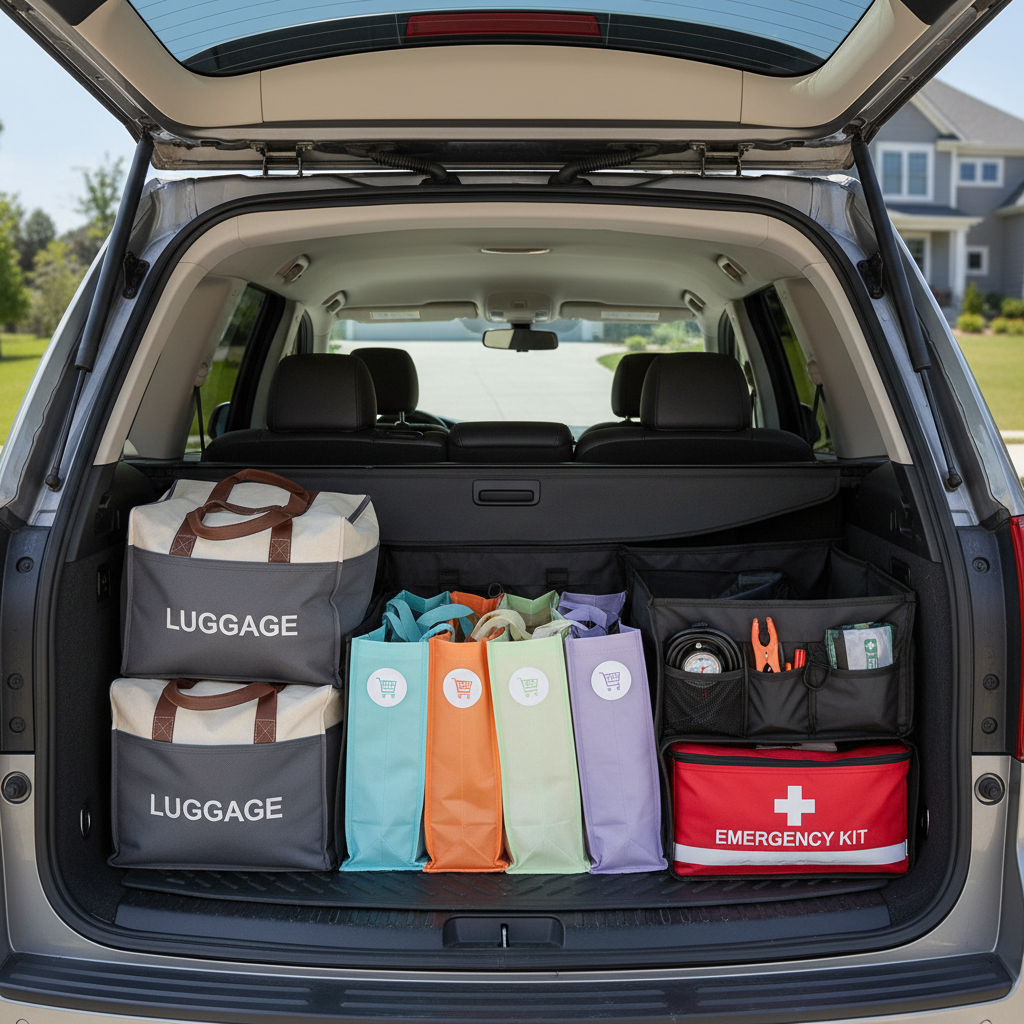
One quick misconception: “bigger bag equals better organization.” In practice, oversized bags invite overpacking, sagging, and awkward lifting. Smaller, structured bags often work better, especially when you want items to stay upright and easy to grab.
What actually makes a trunk storage bag “best”
When people ask for the best car storage bags for luggage trunk organization, they’re usually comparing brand names, but the real difference comes from a few design choices that show up in daily use.
- Structure: Semi-rigid walls or reinforced panels keep the bag standing, soft totes flop and spill when you brake.
- Bottom grip: Rubberized base, hook-and-loop strips, or compatibility with trunk carpet helps reduce sliding.
- Carry comfort: Wide handles, stitched reinforcement, and balanced strap placement matter more than you expect.
- Access: A big top opening beats “too many small pockets” when you’re loading luggage fast.
- Cleanability: Wipe-clean liners help with muddy shoes, beach gear, or a leaking bottle.
- Fold-flat storage: If you only need it on weekends, folding neatly becomes a deal-breaker.
According to National Highway Traffic Safety Administration (NHTSA), loose items in vehicles can become dangerous projectiles during sudden stops or crashes, so secure storage has a safety angle, not just a neatness angle.
Quick self-check: which trunk situation do you have?
If you buy the wrong style, you’ll blame the bag when the mismatch is the real problem. Use this quick check to narrow down what you need.
- Mostly groceries and daily errands: You need upright structure, quick access, and a base that grips.
- Road trips with suitcases: You need cube-like bags that stack, plus handles that won’t cut into hands.
- Sports, kids, or pets: You need wipeable fabric, odor resistance, and separate “dirty” zones.
- Small sedan trunk: You need low-profile bags that fit under the parcel shelf and around wheel wells.
- Pickup bed or cargo area: You need weather resistance and tie-down compatibility.
If your trunk has a sloped floor or slick plastic, prioritize anti-slip bottoms or add a non-slip cargo mat first, otherwise even the best car storage bags for luggage trunk will drift with every turn.
Types of car storage bags (and who they fit)
Most “trunk organizers” fall into a few practical categories. You can mix types, but it helps to pick a main one and build around it.
Structured trunk totes
These are the classic boxy organizers with dividers. They work best for groceries, detailing supplies, and everyday carry items. Look for removable dividers so you can fit odd-shaped items.
Compression or packing cubes (car-friendly sets)
For luggage-heavy trips, cube systems help keep clothes, cables, and toiletries from becoming one messy duffel. Choose cubes with sturdy zippers and a grab handle, and avoid ultra-thin mesh if you toss them around.
Heavy-duty utility bags
Think thick fabric, reinforced corners, big handles. These are great for tools, recovery straps, and roadside gear, especially if you don’t want hard plastic rattling.
Insulated cooler bags
If you do Costco runs, meal prep, or long commutes, one insulated bag prevents spills and temperature swings. Many people buy two and rotate.
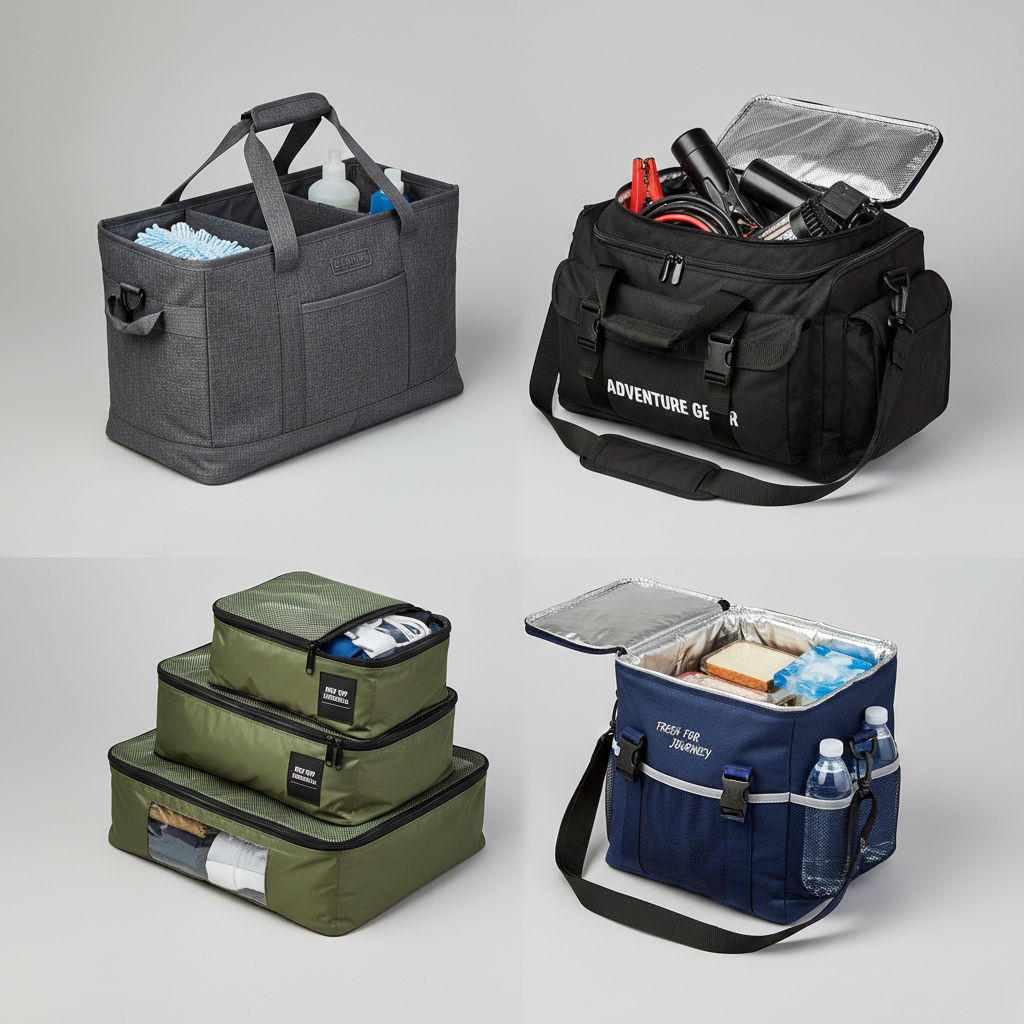
Mixing a structured tote plus one specialized bag, like insulated or utility, often beats buying a single “do-everything” organizer.
Buying checklist: specs that matter more than marketing
You don’t need perfection, you need fewer annoyances. Here’s what tends to separate a good buy from a regret.
- Dimensions that match your trunk: Measure width between wheel wells and trunk depth; many returns happen because of wheel-well bulges.
- Weight rating and stitching: Reinforced seams and bar-tack stitching help for heavier loads, like water jugs.
- Zippers that don’t snag: If a bag has lids, look for chunky zipper teeth and smooth pulls.
- Divider strength: Flimsy dividers bow outward and stop doing their job after a few weeks.
- Anchor options: Straps, D-rings, or hook-and-loop patches help stabilize the bag.
- Material fit for your life: Polyester with a coating wipes clean, canvas feels nice but can hold stains.
For many families, the “best” choice isn’t luxury materials, it’s a bag you don’t mind carrying in with one hand while holding a kid’s backpack with the other.
A practical comparison table (use this before you buy)
Below is a simple way to compare options without getting lost in product pages. Treat it as a decision aid, not a lab test.
| Use case | Bag style to prioritize | What to look for | Common downside |
|---|---|---|---|
| Weekly groceries | Structured tote with dividers | Rigid walls, anti-slip bottom, open top | Bulky when empty if it doesn’t fold well |
| Road-trip luggage | Stackable cubes + one structured tote | Grab handles, uniform sizing, durable zips | Cubes can be annoying if sizes don’t match suitcases |
| Sports / beach gear | Wipeable utility bag | Water-resistant liner, easy rinse, venting | Less “pretty,” more utilitarian |
| Cold items | Insulated cooler bag | Leak-resistant seams, sturdy base, easy-clean interior | Takes space even when not needed |
| Emergency kit | Heavy-duty utility bag | Bright interior, labeled pockets, strong handles | Can get heavy quickly if overpacked |
Setup that works: a 20-minute trunk organization plan
Buying bags is the easy part. The setup is what makes the system stick past week two.
Step 1: pick 3 zones, not 10
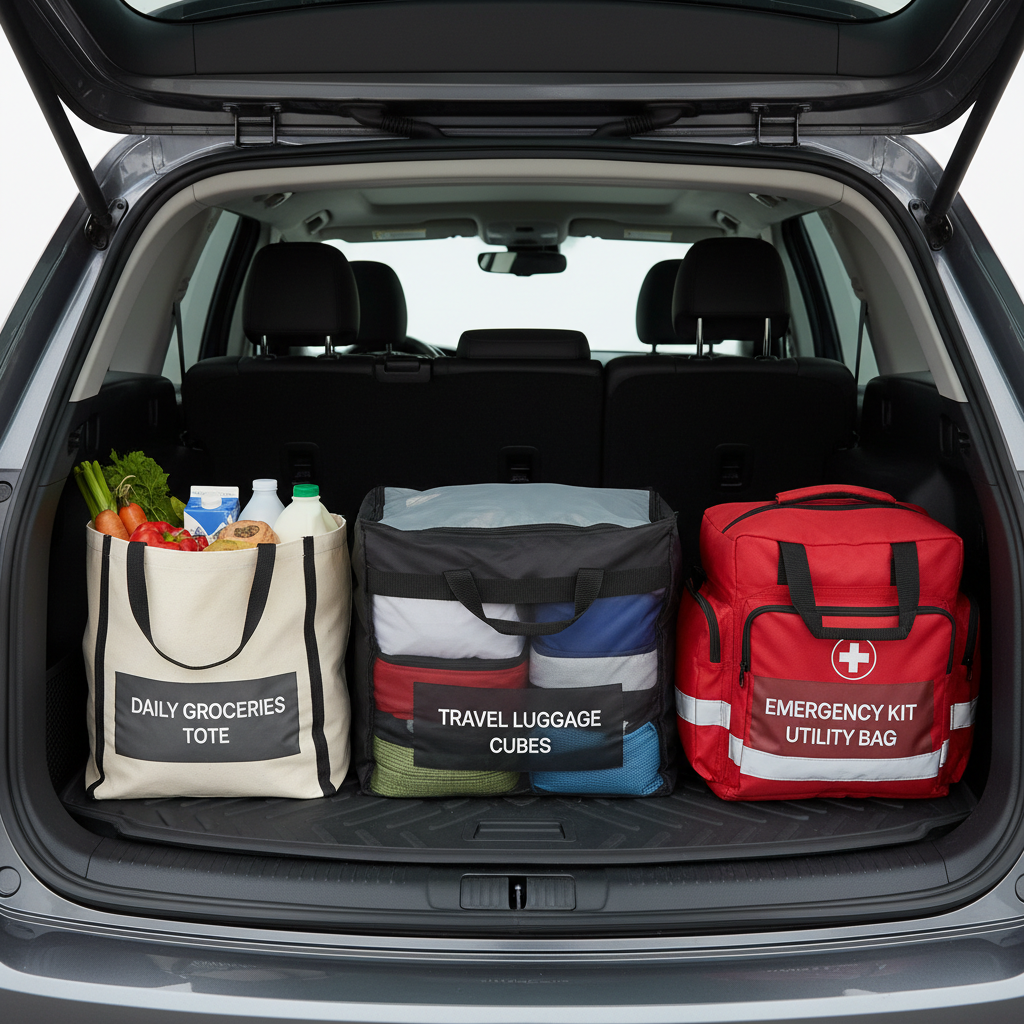
- Daily zone: groceries, reusable bags, small umbrella
- Trip zone: cubes, spare chargers, travel toiletries
- Just-in-case zone: first aid, flashlight, gloves, basic tools
If you create too many zones, you’ll stop maintaining them, then everything migrates into one “random pile” again.
Step 2: match bag count to how often you unload
If you remove bags every day, keep it to 1–2 main bags and one small pouch. If bags stay in the car most of the time, adding a dedicated emergency bag becomes easier because it won’t constantly be in your way.
Step 3: stop sliding at the source
If your trunk floor is slippery, a bag with a grippy bottom helps, but adding a trunk mat or using existing tie-down points often works better. For safety, avoid blocking access to a spare tire compartment or emergency latch.
Step 4: label only what you forget
Labeling every pocket looks organized, but it’s extra work. Label the emergency bag and the “cables / adapters” pouch, those are the two that people tend to dump and forget.
Once the zones are set, the best car storage bags for luggage trunk organization feel invisible, you just load, drive, and unload without reorganizing each time.
Mistakes that make even good storage bags fail
- Buying too tall: the trunk closes, but you can’t see into the bag, so you start tossing items on top.
- Ignoring handle comfort: thin straps hurt, you stop carrying the bag inside, then clutter stays in the car.
- Overusing dividers: rigid dividers can waste space if your items change day to day.
- Storing sharp tools loosely: tools can tear fabric; use a tool roll or hard case inside the bag.
- Letting wet gear sit: mildew smell shows up fast; choose breathable designs or dry items before storing.
Also, if you carry hazardous materials like fuel canisters or chemicals, follow the product label and local guidance, and consider asking a professional if you’re unsure about safe transport practices.
When you should get extra help or change the plan
If you’re still fighting mess after trying a basic bag setup, the issue might be the vehicle layout or a safety constraint.
- Chronic sliding even with grippy bags: a cargo mat, net, or tie-down anchors may be necessary.
- Mobility or back pain concerns: consider smaller bags and lighter loads, and ask a healthcare professional for lifting guidance if pain is persistent.
- Frequent long-haul travel: you may benefit from a modular system that transfers from trunk to hotel without repacking.
According to AAA, keeping an emergency kit accessible is a common preparedness recommendation, so if your current organization makes emergency gear hard to reach, it’s worth redesigning your zones.
Key takeaways + a simple buying decision
If you want one clean takeaway, pick bags based on your routine, not your aspirational “organized life.” For many drivers, a structured tote for daily use plus one dedicated utility bag handles most chaos, then you add cubes or an insulated bag when your pattern demands it.
- Errands: structured tote with strong base and easy carry
- Trips: stackable cubes plus one open tote
- Messy gear: wipeable utility bag
If you’re shopping right now, measure your trunk, pick your three zones, then choose the bag style that supports those zones, that’s the fastest route to a setup you’ll keep using.
FAQ
What size should I buy for a sedan trunk?
Many sedans do better with two medium structured bags instead of one large one, because wheel wells and trunk hinges steal usable space. Measure the flat floor area and keep height modest so you can see inside.
Are hard plastic trunk organizers better than bags?
Hard organizers can be stable and easy to wipe, but they’re often bulky and uncomfortable to carry. Bags win when you actually bring items into the house, especially for groceries and travel.
How do I keep storage bags from sliding around?
Start with a grippy bottom or hook-and-loop strips that match trunk carpet, then use tie-down points if your car has them. If the trunk is smooth plastic, a cargo mat usually helps more than swapping bags.
Do I need separate bags for emergency gear and daily items?
In many cases, yes, because emergency items should stay consistent and easy to find. A dedicated, clearly marked utility bag prevents your flashlight and first-aid kit from being “borrowed” into the daily mess.
What material holds up best for wet or dirty gear?
Coated polyester or similar wipeable fabrics tend to be easier to clean than cotton canvas. If you routinely carry wet gear, look for a liner you can wipe quickly and let the bag air out.
Are packing cubes useful if I already have suitcases?
They can be, especially when multiple people share a trunk and small items get lost. Cubes keep categories together, and they transfer between trunk and hotel without repacking, but only if you pick sizes you’ll reuse.
How many bags is too many?
When you spend more time deciding where an item goes than loading it, you have too many containers. Most trunks feel manageable with 2–4 primary bags plus one small pouch for cables or first aid.
If you’re trying to upgrade trunk organization without turning your cargo area into a maze, start by choosing one everyday bag you’ll truly carry, then add a second bag that solves your biggest pain point, like sliding groceries or messy sports gear.