
How to clean car engine bay without water safely comes down to two things: choosing the right low-moisture products, and keeping anything electrical as dry as you reasonably can. You can get a noticeably cleaner bay without a hose, without steam, and without turning “detailing” into a troubleshooting session.
This question matters because engine bays collect oily film, road salt, dust, and leaf debris, and that mix can hold heat, trap smells, and make it harder to spot leaks. But at the same time, modern bays have sensors, connectors, and plastics that do not love being soaked, especially if you’re working in an apartment lot or a cold climate where water lingers.
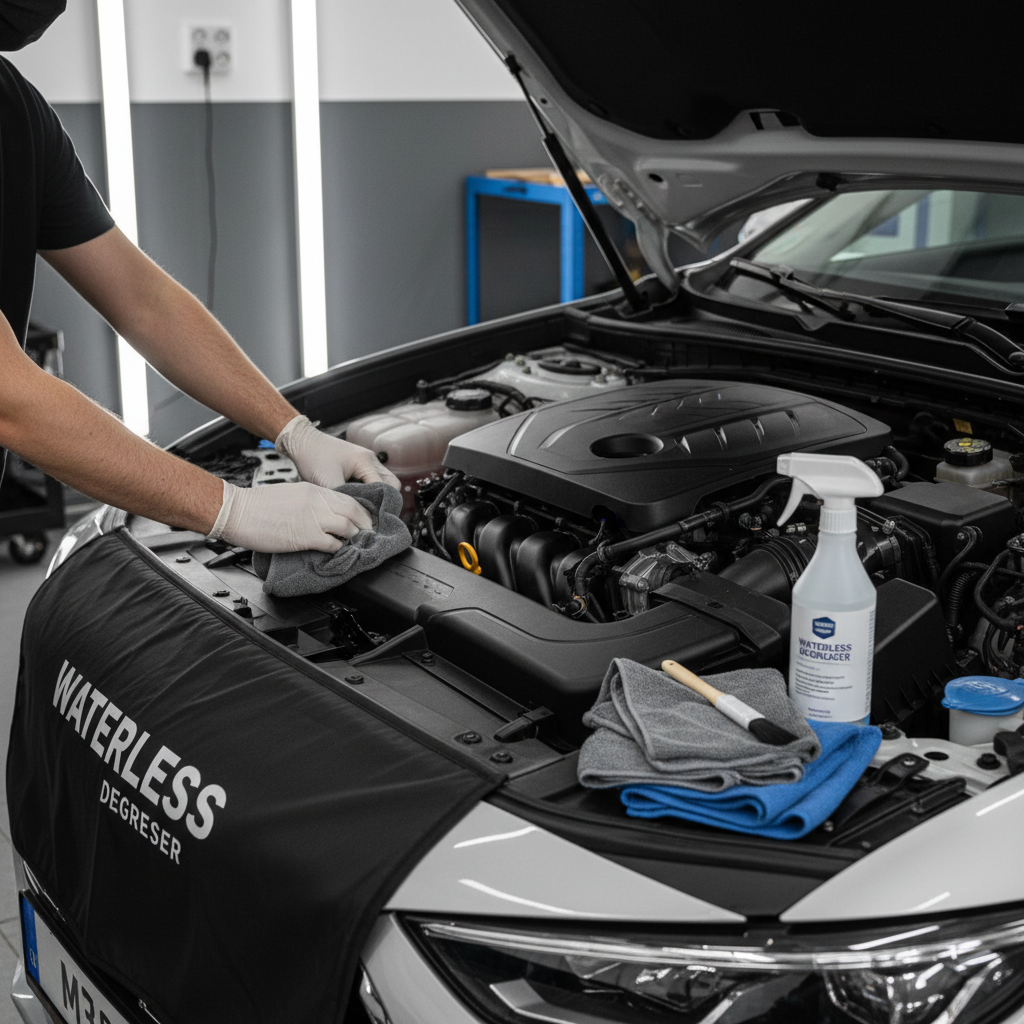
People get tripped up by one common assumption: that “no water” means “no liquid at all.” In practice, you’ll usually use a targeted cleaner or waterless degreaser, you just avoid flooding, rinsing, and pushing moisture into connectors. This guide focuses on realistic steps you can do at home, plus a few guardrails so you know when to stop and get help.
When a waterless engine bay clean makes sense (and when it doesn’t)
A no-rinse approach is typically a good fit if your engine bay is dusty, lightly grimy, or has small oily fingerprints around the oil cap area. It’s also common when you can’t use runoff water, or you’re cleaning during colder weather.
- Good candidates: dust, light grease haze, dried splash marks, leaf debris, salt film on painted surfaces
- Proceed carefully: older vehicles with brittle wiring, aftermarket wiring (amps/lights), heavy oil seepage
- Skip DIY and diagnose first: fresh wet oil, strong fuel smell, misfires, warning lights, visible damaged insulation
According to the U.S. Environmental Protection Agency (EPA), washing vehicles where runoff enters storm drains can contribute pollutants to waterways, which is why many people prefer low-water or waterless methods when local rules or parking situations are strict.
Tools and products that actually work (without drenching anything)
You don’t need a huge kit, but the wrong chemicals can haze plastics or swell rubber. If you’re unsure, test a small hidden area first.
Basic setup
- Microfiber towels (10–15 is not excessive, you’ll “retire” oily ones quickly)
- Soft detailing brushes (one small for tight areas, one medium for plastics)
- Compressed air (canned air or a small blower) for dust and crevices
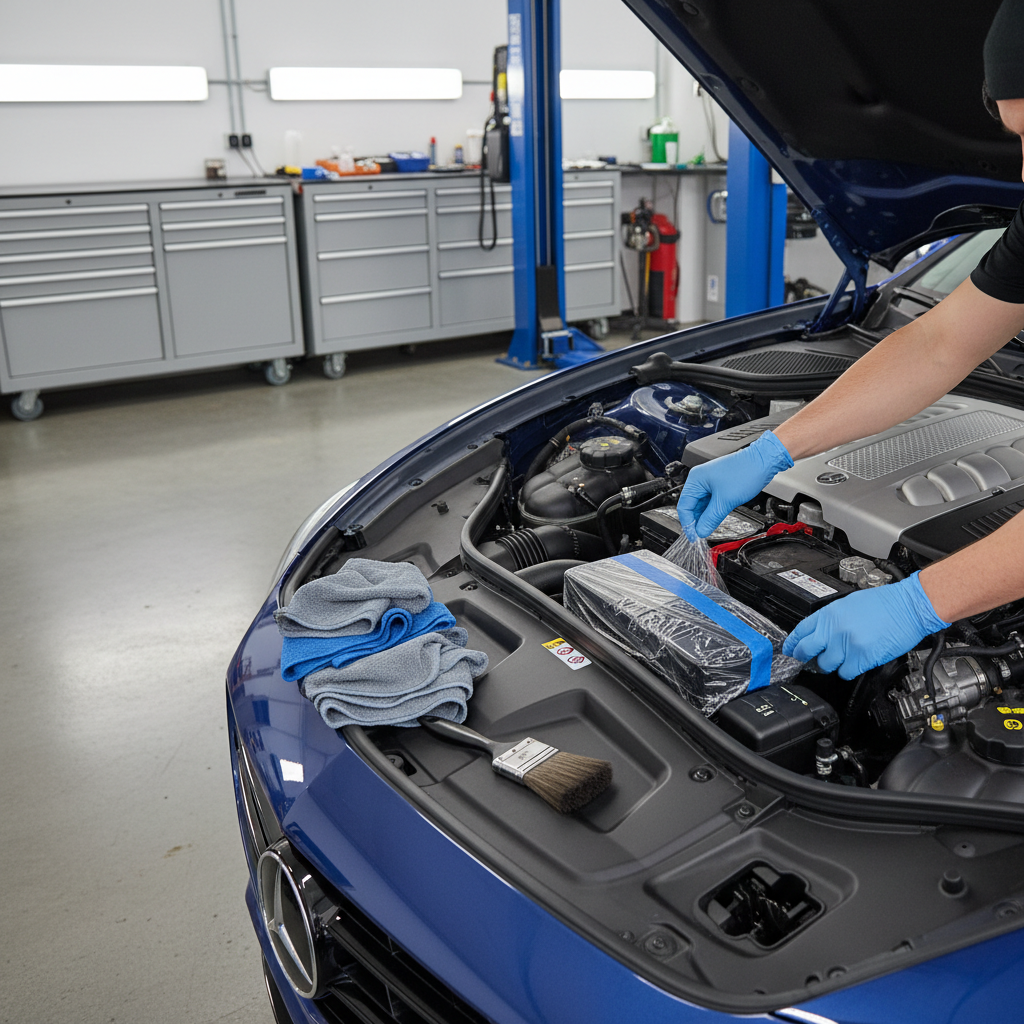
- Plastic bags + painter’s tape to cover sensitive points
- Nitrile gloves and eye protection, especially around degreasers
Product types
- Waterless engine-safe degreaser: spray-on, wipe-off formulas designed for low moisture
- All-purpose cleaner (APC): diluted, for plastics and painted metal, not for heavy oil
- Plastic/rubber dressing: optional, for a factory-satin finish (avoid greasy shine near belts)
Key point: avoid brake cleaner, carb cleaner, and harsh solvents for general wiping. Those can be too aggressive for plastics, labels, and some rubber components.
Quick self-check: how dirty is “too dirty” for no-water cleaning?
Before you start spraying anything, take 60 seconds and classify what you’re looking at. This prevents the classic mistake of smearing oil everywhere with a towel.
- Level 1 (dusty): dry dust, grit, leaves, light gray film
- Level 2 (light grime): sticky haze on plastic covers, fingerprints, mild road film
- Level 3 (oily): dark wet areas, sludge near seams, visible seepage around valve cover or power steering area
If you’re at Level 1–2, a waterless process is usually straightforward. At Level 3, you can still improve appearance, but you may be masking an active leak, so treat it as “clean enough to inspect,” not “detail perfection.”
Step-by-step: how to clean car engine bay without water
This is the workflow that tends to be safest: dry removal first, then controlled chemical, then careful wipe-down. Keep the engine cool to the touch.
1) Prep the area (5 minutes)
- Park in shade, let the engine cool fully.
- Remove loose debris by hand, then use compressed air to lift dust out of corners.
- Cover sensitive parts you can easily identify: exposed intakes, open filters, obvious aftermarket wiring junctions.
2) Start with the least aggressive cleaner
Mist your APC (properly diluted per label) onto a towel or brush, not directly into the bay. Wipe broad plastic covers and painted areas first, turning the towel often so you don’t redeposit grime.
- Work top-down so dust falls onto areas you haven’t finished.
- Use the brush for textured plastics, then wipe immediately.
3) Spot-treat grease with a wipe-off degreaser
For oily spots, spray degreaser onto a microfiber towel, then press and lift. If needed, use a brush lightly, then wipe again with a clean towel. You’re trying to lift the contamination, not spread it thin.
- Keep product away from serpentine belts and pulleys.
- If you accidentally get product on a belt, wipe it off right away with a clean, barely damp towel, then dry.
4) Final wipe and dry
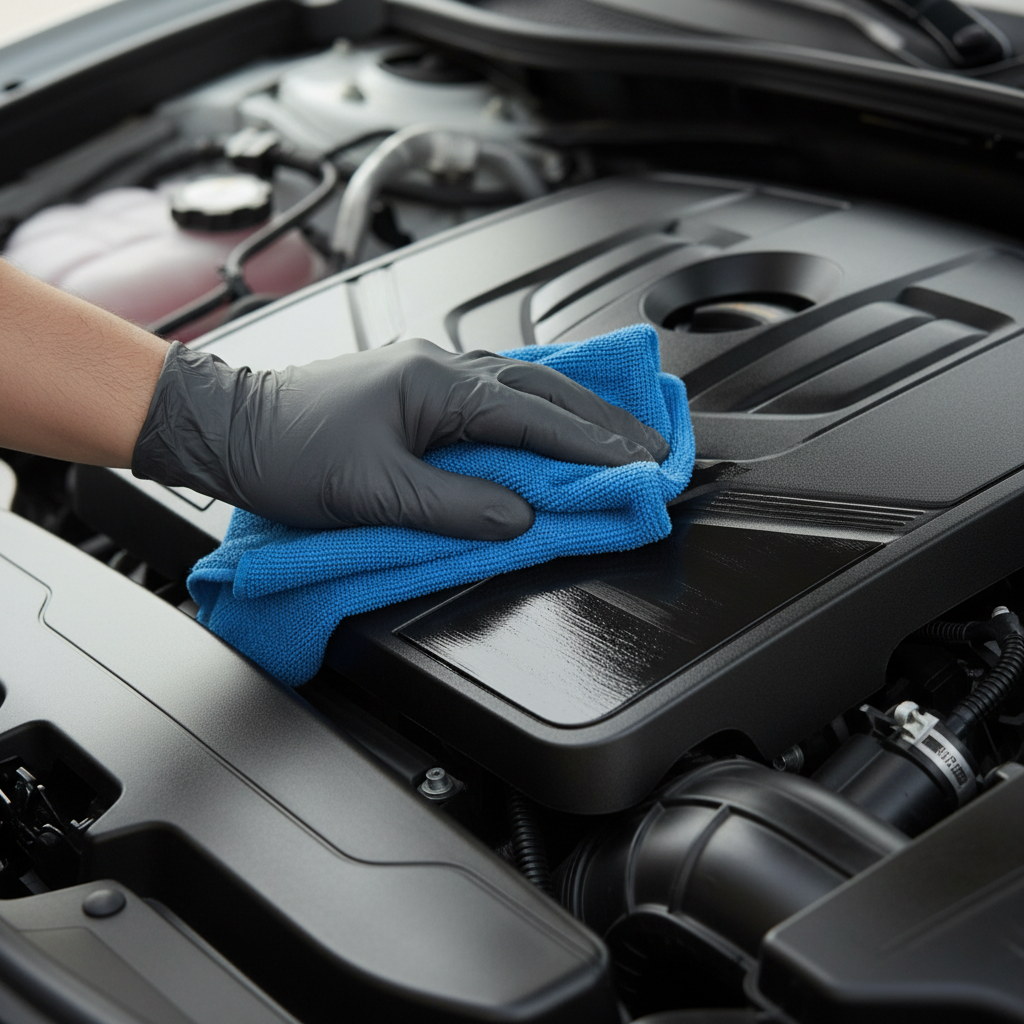
Use a fresh dry microfiber to buff remaining haze. If you used any product that leaves residue, do one more pass with a lightly damp towel (minimal moisture), then dry again.
5) Dress plastics (optional)
If you want the “finished” look, apply a water-based dressing to a foam applicator, then wipe plastic covers and rubber hoses lightly. Skip anything that stays greasy, since it attracts dust and can migrate.
Product choices by situation (table)
If you’re standing in the aisle unsure what to grab, this mapping is usually a safe starting point.
| Situation | What to use | What to avoid | Notes |
|---|---|---|---|
| Dusty plastics and covers | APC (diluted), microfiber, soft brush | Strong solvents | Spray into towel to reduce overspray |
| Light greasy fingerprints | Waterless degreaser (wipe-off) | Soaking the area | Short dwell time, wipe quickly |
| Heavier oily patches | Stronger wipe-off degreaser + multiple towels | Rubbing hard with one towel | Clean to inspect, consider leak check |
| Salt film in winter | APC + lightly damp wipe, then dry | Leaving moisture sitting | Dry thoroughly, use air if possible |
| Rubber hoses look faded | Water-based dressing (thin coat) | Oily silicone shine products | Less is more, keep off belts |
Common mistakes that cause problems (and how to avoid them)
- Cleaning on a hot engine: product flashes fast, can spot plastics, and increases fume exposure. Wait until cool.
- Spraying directly into gaps: even “waterless” cleaners can pool where you can’t wipe. Spray onto the towel first for tight areas.
- Using one towel too long: it feels efficient, but it just smears. Rotate towels often.
- Over-dressing everything: shiny residue attracts dust, and you may end up with a dirtier bay a week later.
- Trying to “erase” heavy oil without asking why it’s there: if it returns quickly, it’s likely a leak or seepage that needs attention.
When to stop and get professional help
A waterless wipe-down is cosmetic and preventive, but it’s not a substitute for mechanical diagnosis. Consider a detailer or mechanic if any of these show up:
- Electrical symptoms: new warning lights, rough idle, hard starting after you cleaned
- Strong odors: fuel smell, burning smell, or smoke, even if intermittent
- Active leaks: fresh wet oil pooling, coolant residue, or dripping
- Unknown modifications: lots of aftermarket wiring where you can’t tell what’s protected
If you suspect a leak or an electrical issue, it’s usually smarter to consult a qualified mechanic. Cleaning can make inspection easier, but pushing further may hide the trail.
Practical “do this next” routine
If you want a simple cadence that keeps things under control, this works for many daily drivers:
- Monthly: remove debris, quick dry wipe of top plastics
- Every 3–6 months: full waterless wipe-down, spot degrease, light dressing
- After winter storms: check for salt film, wipe and dry, especially around strut towers and painted metal
Key takeaways: keep moisture targeted, wipe more than you spray, and treat heavy oil as a clue, not just a mess.
FAQ
Is it safe to clean an engine bay without rinsing?
In many cases, yes, because you’re reducing the main risk factor: water intrusion. The safety still depends on using engine-safe products, keeping the engine cool, and avoiding direct spray into connectors and seams.
What can I use instead of water to remove grease?
A wipe-off degreaser designed for automotive use is usually the most practical substitute. Apply it to a towel first, then lift the grease in passes, rather than saturating the surface.
Can I use household cleaners like dish soap or Simple Green?
Dish soap often leaves residue and needs rinsing, which defeats the point. Some household APC-style products can work if they’re compatible with automotive plastics and you dilute correctly, but check the label and test a small spot.
Do I need to disconnect the battery?
For a light waterless wipe-down, many people don’t. If you’re nervous, or you’ll be working close to battery terminals, covering them is a reasonable middle ground. If you choose to disconnect, follow your vehicle manual, since some cars can lose settings.
How do I clean around the alternator without water?
Treat the alternator area as “wipe near it, not on it.” Use a barely damp microfiber for nearby surfaces and keep degreaser off the alternator vents. If it’s coated in oil, it may indicate a leak above it.
Will waterless cleaning remove engine bay odors?
It can help if the odor comes from old grime or spilled fluids on surfaces. If you smell fuel, burning oil, or coolant, cleaning may not solve it and you’ll want a mechanical check.
How long should I wait before starting the car after cleaning?
With a no-rinse method, you’re mainly waiting for any cleaner residue to evaporate and for everything to feel dry. Many people wait 15–30 minutes, longer if you used more product than planned or humidity is high.
If you’re trying to keep an engine bay tidy without breaking rules about runoff, or you just want a safer, low-mess weekend routine, a waterless method is usually the most practical path. If you’d rather not guess which cleaner, towels, and brushes fit your situation, a simple engine-bay-safe kit can save time and reduce trial-and-error, especially on newer cars with tighter packaging.