
The best car portable fridge for road trip camping is the one that matches your power setup, trip length, and what you actually pack, not whatever has the biggest discount that week. If you’ve ever arrived at camp to find melted ice, wet packaging, and questionable meat temps, you already know why this matters.
A good 12V fridge changes the whole rhythm of a road trip: fewer gas-station ice runs, more flexible meal stops, and less anxiety about food safety. But they’re not all interchangeable, and the wrong pick can drain your battery, undercool in heat, or simply not fit where you need it.
This guide helps you decide what to buy (and what to skip), with a quick self-check, a comparison table, and practical setup tips for cars, SUVs, vans, and trucks.
What “best” really means for a car portable fridge
People shop like it’s a mini-kitchen appliance, but in a vehicle it’s closer to a power tool: your electrical system and packing habits decide whether it’s smooth or frustrating.
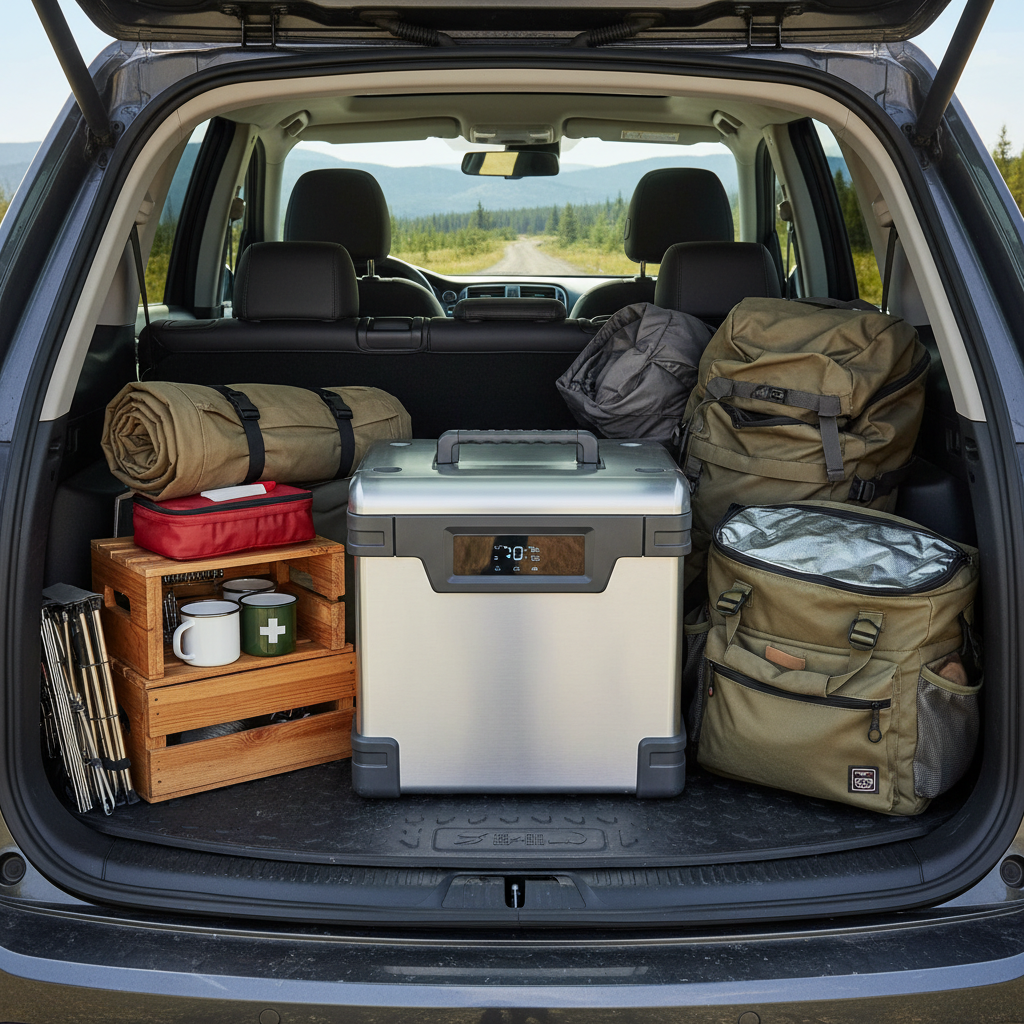
For most U.S. road trip campers, “best” usually comes down to four things:
- Reliable cooling in heat: holding safe temps even when the cabin hits summer highs.
- Power behavior: low draw, solid low-voltage cutoff, and stable performance on 12V.
- Usable size: not just liters, but interior shape that fits bottles, meal prep containers, and grocery packs.
- Trip fit: weekend campgrounds vs multi-day dispersed camping need different approaches.
One more nuance: many “portable fridges” are thermoelectric coolers (they cool relative to ambient temperature). For true refrigeration and freezing, you want a compressor fridge, which is what most serious buyers mean when searching for the best car portable fridge for road trip camping.
Compressor vs cooler: don’t buy the wrong type
If your goal is milk, meat, or meal prep for more than a short drive, treat thermoelectric coolers as “keep it cooler than the car,” not “food-safe fridge.” They can be fine for drinks on a day trip, but they’re often underwhelming in real summer conditions.
Compressor fridges cost more, but they’re the reason people stop using ice. They can maintain fridge temps, many can freeze, and they typically include some kind of battery protection mode.
- Thermoelectric (Peltier): lighter and cheaper, but performance depends heavily on ambient temp.
- Compressor (12V fridge/freezer): higher upfront cost, far better temperature control.
According to USDA Food Safety and Inspection Service (FSIS), perishable foods should be kept at 40°F (4°C) or below. That single guideline is a good reality check when deciding if a “cooler” is enough for your trip.
Quick decision checklist: which size and features you actually need
Before you compare brands, get clear on your own use. This takes five minutes and prevents the classic mistake: buying a fridge that’s either cramped and annoying, or so large it becomes dead weight.
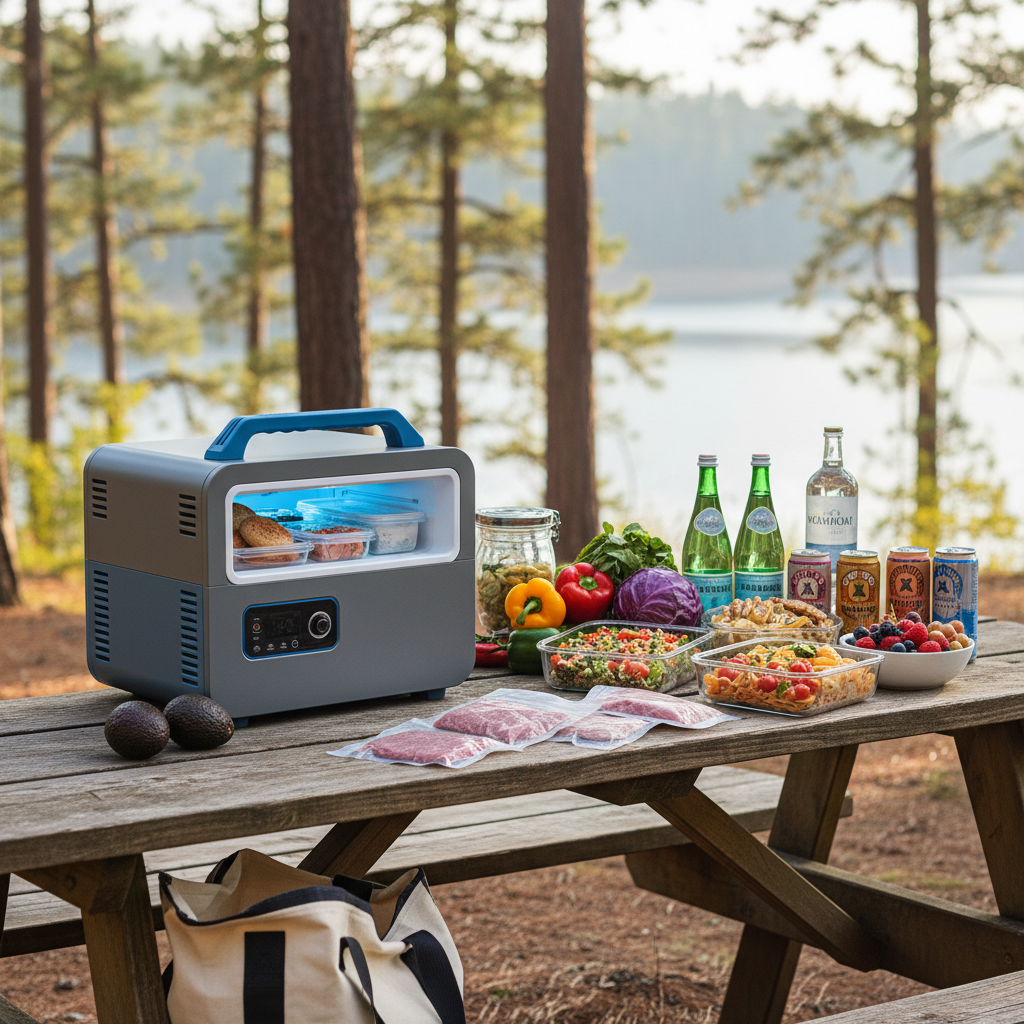
- How many people? Solo and couples often land in the 20–35L range, families often prefer 40–60L.
- How many days between resupplies? The longer you go, the more a freezer-capable model helps.
- Do you need freezing? Ice cream and frozen meat add complexity, but can reduce food waste.
- Where will it live? Rear cargo, behind a seat, truck bed, or inside a drawer system changes the ideal shape.
- What’s your power plan? Just the car outlet while driving, or also a portable power station/second battery at camp?
Feature priorities that tend to matter in the real world: a dependable low-voltage cutoff, a lid that stays shut on washboard roads, an interior layout that matches your containers, and a control panel that’s readable at night.
Comparison table: match the fridge style to your trip
The point of this table is not to crown one winner, but to help you choose a category that behaves the way you expect in your camping routine.
| Use case | Recommended capacity | Cooling type | Power setup | What to watch |
|---|---|---|---|---|
| Weekend campground, mostly drinks | 20–30L | Compressor preferred | 12V while driving, optional power station | Interior height for bottles, tie-down points |
| 3–5 day road trip, groceries + meal prep | 30–45L | Compressor | 12V + battery protection, power station at camp | Low-voltage cutoff settings, insulation quality |
| Dispersed camping, limited resupply | 40–60L | Compressor, freezer capable | Power station or dual battery, solar optional | Daily energy draw, cable quality, ventilation space |
| Overlanding with drawer system | 35–55L | Compressor | Hardwired 12V preferred | Fridge slide clearance, lid direction, service access |
How to choose the best car portable fridge for road trip camping (practical criteria)
This is where the shopping gets real. Specs can look similar across listings, so you want a few “filter questions” that expose whether a model will feel dependable in your vehicle.
1) Power: plan for driving and for camp
Many frustrations come from assuming the car’s 12V outlet behaves like a wall socket. Some outlets turn off with the ignition, others stay live, and some are fused lightly.
- At camp, a portable power station or auxiliary battery often makes the setup calmer than running off the starter battery.
- Low-voltage cutoff matters: it reduces the chance of a no-start situation, but settings vary by model.
- Wiring and socket quality matters more than people think; loose plugs cause nuisance shutoffs.
According to NHTSA, securing cargo helps reduce injury risk in a crash; a fridge is heavy and becomes a projectile if it’s not strapped down. When you plan power, also plan mounting and cable routing so nothing becomes a snag hazard.
2) Capacity: liters don’t tell you the whole story
Two “40L” fridges can pack very differently. A tall, narrow cavity fits bottles but hates wide meal prep containers. A wide cavity fits grocery packs but may block access in a tight cargo area.
- Bring one or two containers you always travel with, compare them to interior measurements.
- Check lid clearance where you’ll place the unit, especially under tonneau covers or drawer systems.
3) Temperature control and real-world stability
For food, you want stable, boring performance. A unit that swings widely or struggles in heat forces you into “rotate the food, babysit the settings” mode, which defeats the point.
- Fridge-only users often run around 34–39°F, adjust as needed for beverages vs produce.
- Freezer use usually requires better power planning and leaving ventilation space.
4) Noise, placement, and ventilation
Compressor fridges cycle on and off. In a small cabin, sound matters at night. Ventilation also matters; blocking vents can reduce performance and raise power draw.
- Leave a little breathing room around vents, especially if tucked in a corner.
- If you sleep in the vehicle, consider placement away from your head area.
Setup that actually works: step-by-step for a typical road trip camp
Buying the unit is half the job. The other half is setting it up in a way that stays reliable when you hit heat, dust, and rough roads.
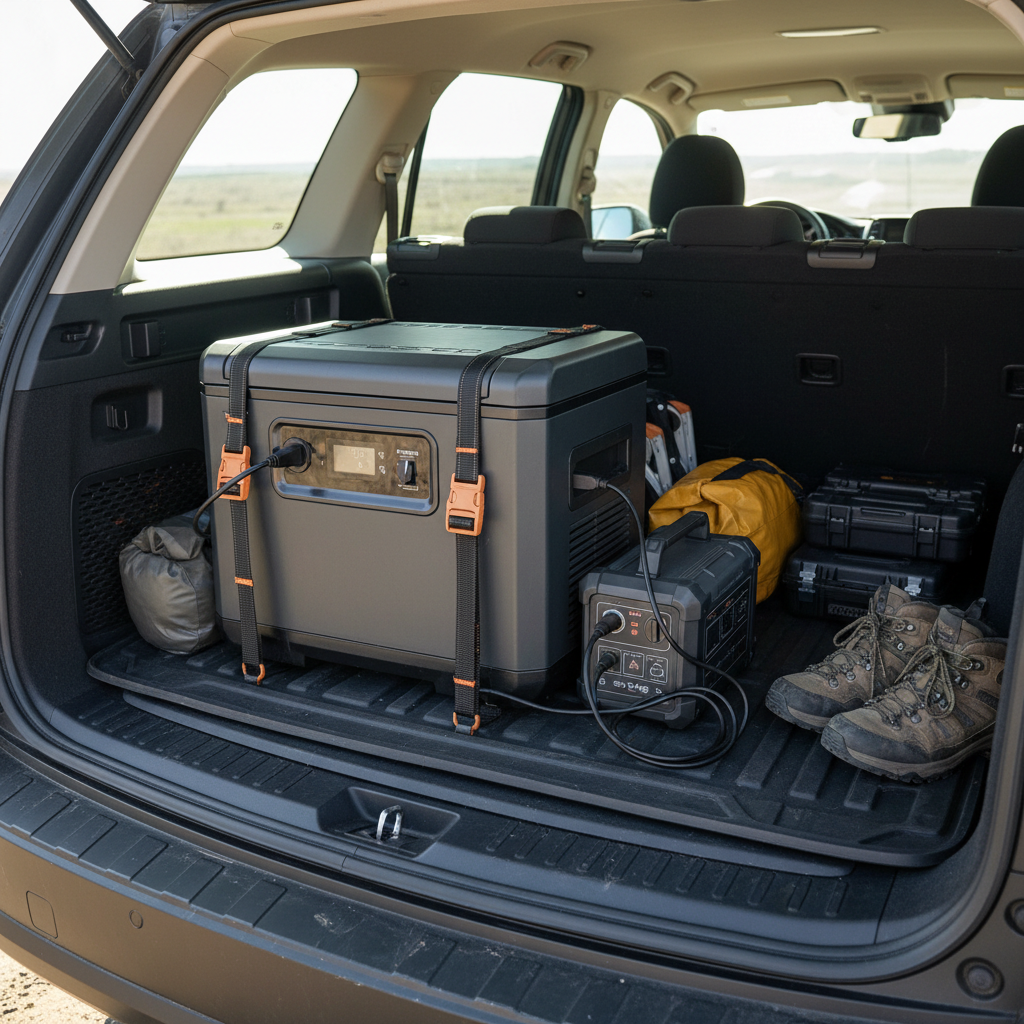
Pre-cool before you leave
If you can, chill the fridge at home on AC power and load pre-chilled food. This reduces the initial workload and saves energy during the first hour of driving.
Pick a stable location and secure it
- Place it on a flat surface, avoid wobble.
- Use tie-down straps or a mounting solution; don’t rely on “it’s heavy so it won’t move.”
- Route cables so they don’t pinch in seat rails or tailgates.
Use two-zone thinking, even with a single-zone fridge
If you’re not buying a dual-zone model, you can still pack smart:
- Put most-sensitive items (meat, dairy) near the coldest area, often closer to the evaporator side.
- Open less often: group drinks separately so you’re not “shopping” inside the fridge.
- Use small bins to reduce chaos; chaos causes longer lid-open time and temp spikes.
At camp: avoid draining the starter battery
Some people run a compressor fridge overnight from the vehicle battery and get away with it, others end up calling for a jump. Battery age, temperature, and vehicle wiring all change the outcome. If you’re unsure, it’s usually safer to run the fridge from a power station or a properly installed auxiliary system, and if you want a permanent dual-battery setup, consider a qualified installer.
Common mistakes (and why they keep happening)
A lot of “my fridge is bad” complaints are really setup issues. Not all, but enough that it’s worth checking these before returning anything.
- Buying too big: it doesn’t fit, blocks access, and you stop using it. Size for your vehicle first, wishlist second.
- Assuming any 12V outlet is equal: some outlets sag voltage under load, causing cutoffs.
- No ventilation gap: especially inside tight drawers or against soft luggage, performance drops.
- Loading warm groceries and expecting instant chill: it can take time, pre-cooling helps.
- Not securing the unit: unsafe and can damage cables and plugs over bumps.
Key takeaway: the best car portable fridge for road trip camping is as much about your power and packing system as it is about the brand badge.
When it’s worth getting professional help
If you plan to hardwire a fridge, add a second battery, or integrate solar and a DC-DC charger, it can get technical quickly. Mistakes can lead to nuisance shutoffs or, in worse cases, electrical issues. If you’re not comfortable with automotive wiring, consider a professional installer or a qualified electrician familiar with vehicle systems.
If you have specific food safety concerns, especially for infants, pregnancy, or medical diets, it’s reasonable to be more conservative with temps and handling, and consult a healthcare professional for personalized guidance.
Conclusion: a smarter way to buy (and enjoy) your fridge
Most campers don’t need the biggest unit on the market, they need a compressor fridge that fits their cargo space, holds safe temps, and plays nicely with how they power camp. Nail those three, and you’ll stop thinking about ice and start thinking about where to stop for fresh groceries.
If you’re deciding this week, do two quick actions: measure the exact spot where the fridge will sit, and write down your power plan for overnight. Those two notes narrow the field faster than any spec sheet.
FAQ
What size is best for a car portable fridge on a road trip?
For many solo travelers and couples, 20–35L is a comfortable range. If you pack meal prep or travel with kids, 40–60L often feels less cramped, but only if it fits your vehicle layout.
Is a dual-zone car fridge worth it for camping?
It can be, if you truly want frozen items while keeping produce and drinks in a separate compartment. Many people buy dual-zone expecting magic, then realize it needs more space and a stronger power plan.
Can I run a 12V fridge overnight on my car battery?
Sometimes, but outcomes vary a lot by battery health, outside temperature, and fridge settings. If you don’t want to gamble with a no-start morning, using a power station or auxiliary battery is usually the calmer choice.
Do I need to pre-cool a portable fridge before leaving?
You don’t have to, but it often helps. Pre-cooling reduces the initial energy spike and gets your food into a safer temperature range sooner, especially in hot weather.
Why does my portable fridge keep shutting off in the car?
Common causes include a loose 12V plug, voltage drop from thin wiring, or an aggressive low-voltage cutoff setting. Testing with a different outlet or a power station can help isolate whether it’s the fridge or the vehicle power path.
What temperature should I set for road trip camping food?
A lot of people aim for mid-30s°F for general food storage, then adjust based on what’s inside. Use a small fridge thermometer if you want extra confidence, and keep perishables at or below 40°F as a baseline safety target.
Is a cheaper thermoelectric cooler enough for camping?
For drinks and short outings, it may be fine. For multi-day trips with meat and dairy, a compressor model is usually a better match because it controls temperature more consistently.
If you’re trying to choose a unit fast, start with your constraints, not the product page: the exact space it must fit, whether you need freezing, and what powers it when the engine is off. If you want a more hands-off setup, look for a compressor fridge with a clear low-voltage cutoff and plan a simple power station kit so camp nights stay stress-free.