
how to check tire pressure correctly comes down to three things most people miss: using the right PSI target, measuring when tires are cold, and trusting a gauge more than a quick glance.
If you’ve ever topped off air at a gas station and still felt the ride was “off,” you’re not alone. Small pressure errors can affect braking feel, steering response, tread wear, and even how often your TPMS warning light pops on.
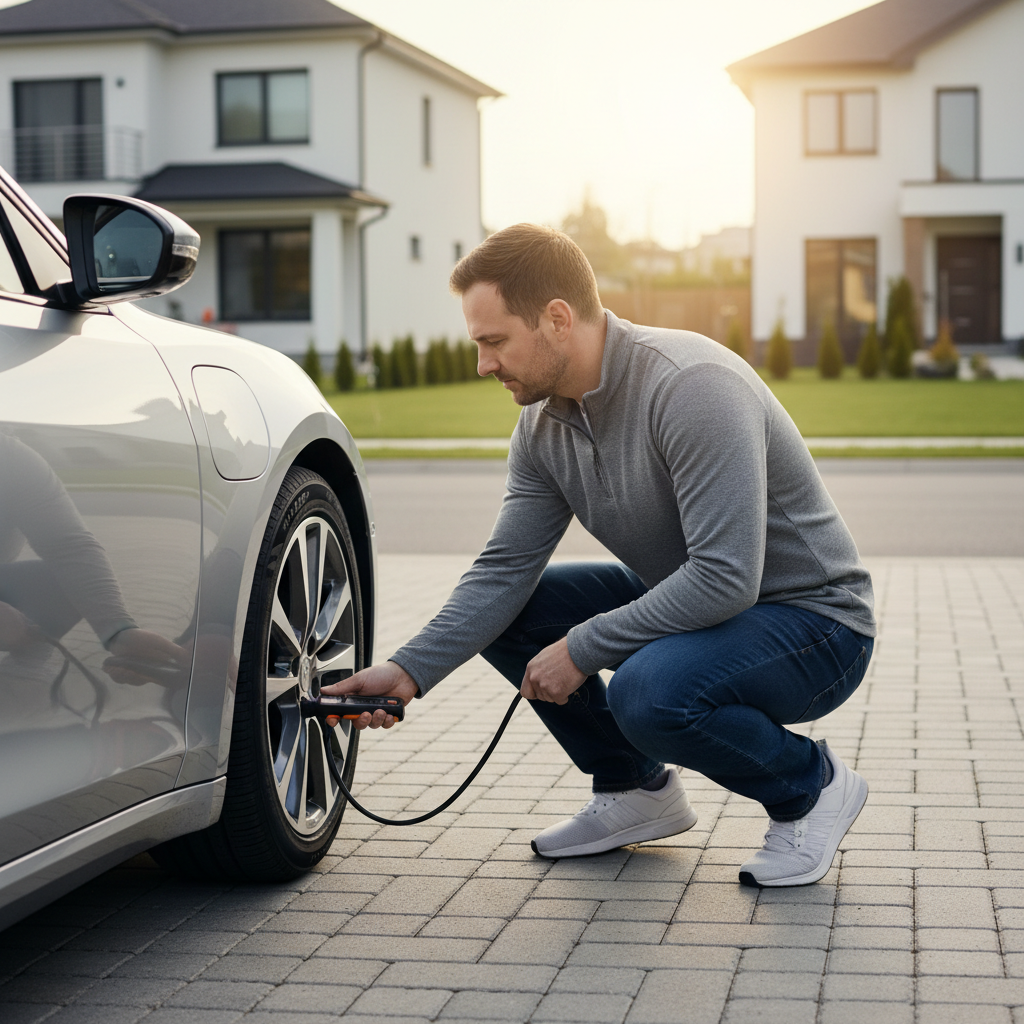
This guide clears up the common confusion, shows you a reliable step-by-step method, and helps you decide when a “DIY check” is enough versus when it’s smarter to let a tire shop take a look.
Know your correct PSI target (don’t use the tire sidewall)
Before you even touch the valve cap, make sure you’re aiming for the correct number. The fastest way to get a wrong reading is to compare your gauge to the wrong target.
- Use the vehicle placard: usually on the driver door jamb, sometimes inside the fuel door or in the owner’s manual.
- Ignore the tire sidewall for daily inflation: the sidewall number is typically the tire’s maximum pressure rating, not the recommended setting for your car.
- Front and rear may differ: many vehicles specify different PSI for handling and load balance.
According to NHTSA, tires that are underinflated can increase heat buildup and raise the risk of tire failure, so it’s worth treating the placard PSI as the baseline unless a professional advises otherwise for a specific load scenario.
Pick the right time: “cold tires” is a real rule
Accuracy starts with timing. “Cold” doesn’t mean the tire feels cool to your hand, it means the air inside hasn’t expanded from driving.
- Best time: morning before you drive, or after the car sits at least 3 hours.
- If you just drove: readings often run higher, and letting air out to “match the sticker” can leave you underinflated later.
- Weather matters: big temperature swings can nudge PSI up or down, so rechecking during seasonal changes is a good habit.
If you’re trying to figure out how to check tire pressure correctly during a road trip, the practical move is to check at the start of the day, then only top up if you’re clearly low, not to chase a perfect number after highway driving.
Tools that make readings trustworthy (and when to replace them)
A gauge is a small tool, but it’s the difference between guessing and knowing. Most drivers do fine with one of these:
- Digital gauge: easy-to-read, often more consistent, batteries required.
- Dial gauge: sturdy, readable, good mid-range choice.
- Pencil gauge: cheap and compact, but easier to misread and can drift over time.
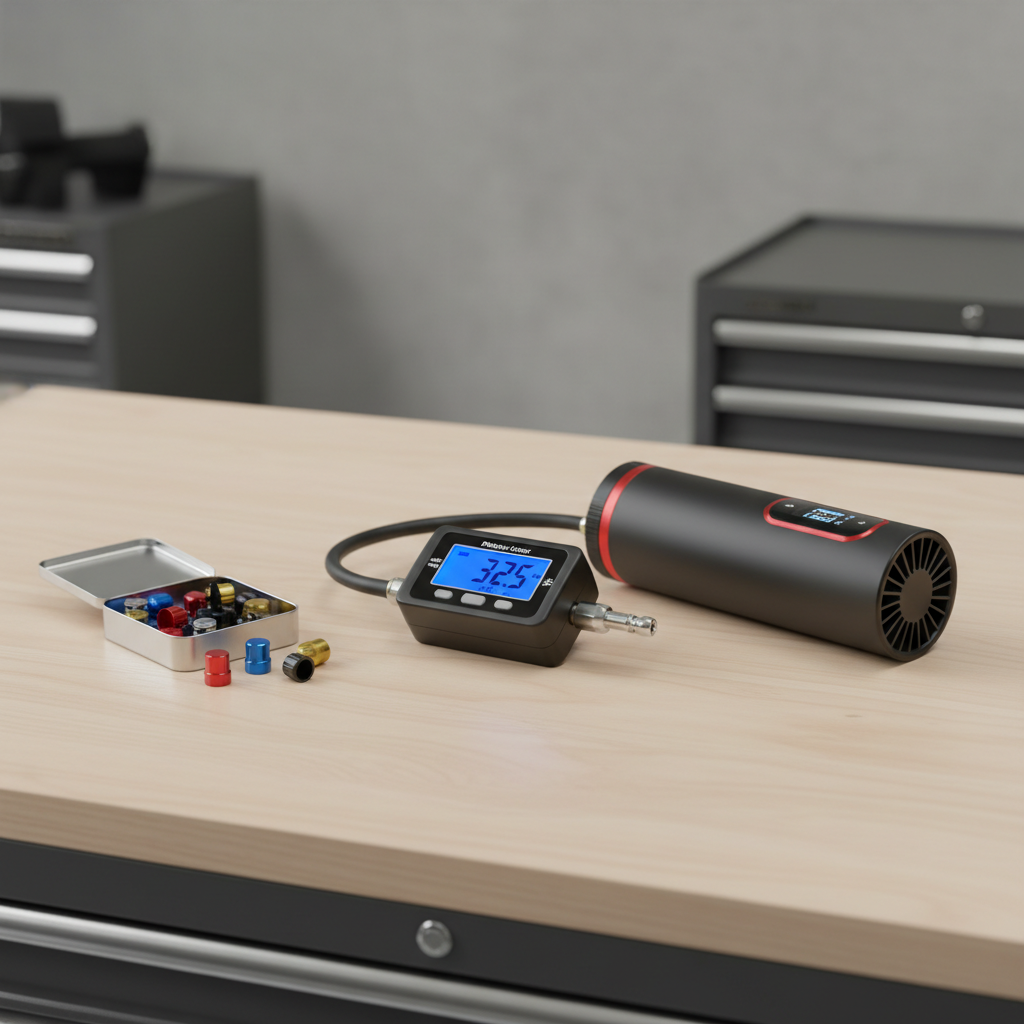
Quick reality check: if your gauge gives wildly different numbers when you measure the same tire twice, or it doesn’t “seat” well on the valve stem, it’s probably time to replace it. For many households, a decent gauge plus a small inflator is the most stress-free combo.
Step-by-step: how to measure tire pressure without errors
Here’s a simple routine that stays accurate even if you’re doing it in a cramped driveway or a busy station.
1) Park safely and find your PSI spec
Park on level ground, set the parking brake, and confirm the placard PSI for front and rear. If you’re towing or carrying a heavy load, the owner’s manual may note alternate pressures; when in doubt, a tire professional can advise for your specific setup.
2) Remove the valve cap and seat the gauge firmly
Press the gauge straight onto the valve stem until the hissing stops. A brief hiss at first is normal, steady leaking means you’re not sealed.
3) Read the PSI, then repeat once
Take a second reading right away. If it’s off by more than about 1–2 PSI, reseat the gauge and try again. Consistency matters more than one “perfect” reading.
4) Adjust with air, then recheck
Add air in short bursts, recheck, and stop when you hit the target. If you overfill, bleed a little air and recheck. This is the part where people usually rush and end up chasing the number.
5) Replace the valve cap
It’s small, but it helps keep dirt and moisture out of the valve core, which can reduce slow leaks over time.
If you’re keeping score, this is the most repeatable way to check tire pressure correctly without overthinking it.
A quick self-check: which situation are you in?
Different symptoms suggest different next steps. Use this as a fast diagnostic before you start adjusting PSI randomly.
| What you notice | What it often suggests | What to do next |
|---|---|---|
| TPMS light comes on, but tires “look fine” | One tire slightly low, or temperature drop | Measure all four when cold, inflate to placard PSI |
| One tire keeps losing a few PSI | Slow leak, valve issue, or rim seal problem | Check weekly, inspect for nails, consider a shop leak test |
| Steering feels vague or car pulls | Pressure imbalance, alignment, or tire wear | Match left/right pressures, then evaluate alignment if it persists |
| Center tread wears faster than edges | Often overinflation | Confirm placard PSI, adjust when cold, monitor wear |
| Edges wear faster than center | Often underinflation (or aggressive cornering) | Inflate to spec, recheck monthly, inspect for damage |
TPMS vs. a gauge: why both matter
TPMS is helpful, but it’s not a substitute for measuring. According to NHTSA, TPMS is designed to warn you when pressure drops significantly below the recommended level, not to keep every tire perfectly tuned day-to-day.
- TPMS tells you “something’s wrong”, not necessarily which number you should inflate to.
- Some systems estimate pressure based on wheel speed, which can be less precise than a direct sensor system.
- A gauge helps you balance all four, which matters for handling and tire wear.

If your TPMS light stays on after you inflate correctly, you may need to drive a short distance for the system to update, or the car may require a relearn procedure. If it continues, a shop can check sensor health and scan for faults.
Common mistakes that quietly ruin accuracy
Most “bad” pressure checks aren’t dramatic, they’re small habits that compound.
- Using the gas station hose gauge as your only measurement: some are fine, many are worn. Use your own gauge to confirm.
- Bleeding air from a hot tire: you can end up underinflated once the tire cools.
- Forgetting the spare: if you have a full-size or compact spare, it can be low for years without anyone noticing.
- Chasing “door sticker PSI” without context: extreme loads, trailer towing, or aftermarket tire size changes can complicate things, check the manual and ask a professional if unsure.
One more that’s underrated: inconsistent technique. Pressing the gauge at an angle or removing it too quickly can shave off a PSI or two and make you think the tire is low.
Practical routine: when and how often to check
If you want a schedule that works in real life, aim for consistency instead of perfection.
- Monthly: check all four tires when cold.
- Before longer drives: especially if the car sat for a while.
- After big temperature changes: early winter cold snaps are a common trigger for low-pressure warnings.
Key takeaways you can keep in your head:
- Use the door-jamb placard PSI, not the tire sidewall.
- Measure cold, then adjust slowly and recheck.
- TPMS helps, but a gauge is how you stay accurate.
When to get professional help (and why it’s not overkill)
Some tire issues look like “just low PSI,” but the cause can be a puncture, bead leak, bent wheel, or a valve core problem. If any of these show up, it’s reasonable to visit a tire shop for a proper inspection:
- One tire drops more than a couple PSI per week in normal conditions
- You see a nail, screw, or bubbling in the tread or sidewall
- Repeated TPMS warnings even after you confirm correct pressure
- Vibration, pulling, or uneven wear that doesn’t improve after pressures match
Tires are safety-critical, so if you’re unsure about damage, it’s smart to ask a qualified technician rather than trying to “drive and see.”
Conclusion: a simple way to stay accurate
Once you know the right PSI target and you measure when the tires are cold, the rest is just repeatable technique, seat the gauge, read twice, adjust in small steps. If you want one action to take today, put a reliable gauge in your glove box and set a monthly reminder, it’s the easiest way to catch small leaks early and keep the car feeling predictable.